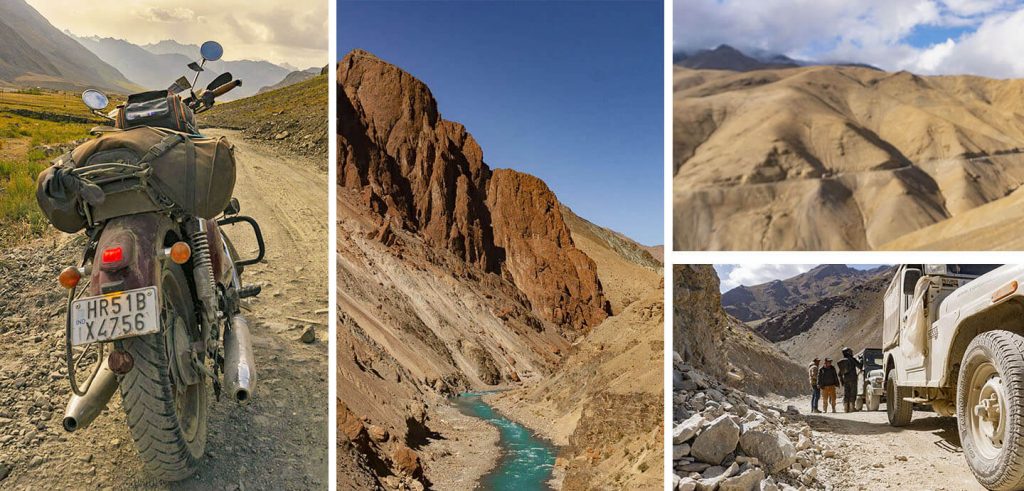
Planning Spiti Valley bike trip? This blog will help you plan a solo journey the basis of my personaly experiences and learning.
In this detailed Spiti Valley guide, I’ll cover:
- The best route (Shimla vs Manali)
- A complete 5-day and 9-day Spiti Valley road trip itinerary
- Budget breakdown
- Best time to visit
- Road conditions (2026 update)
- Bike trip tips and safety advice
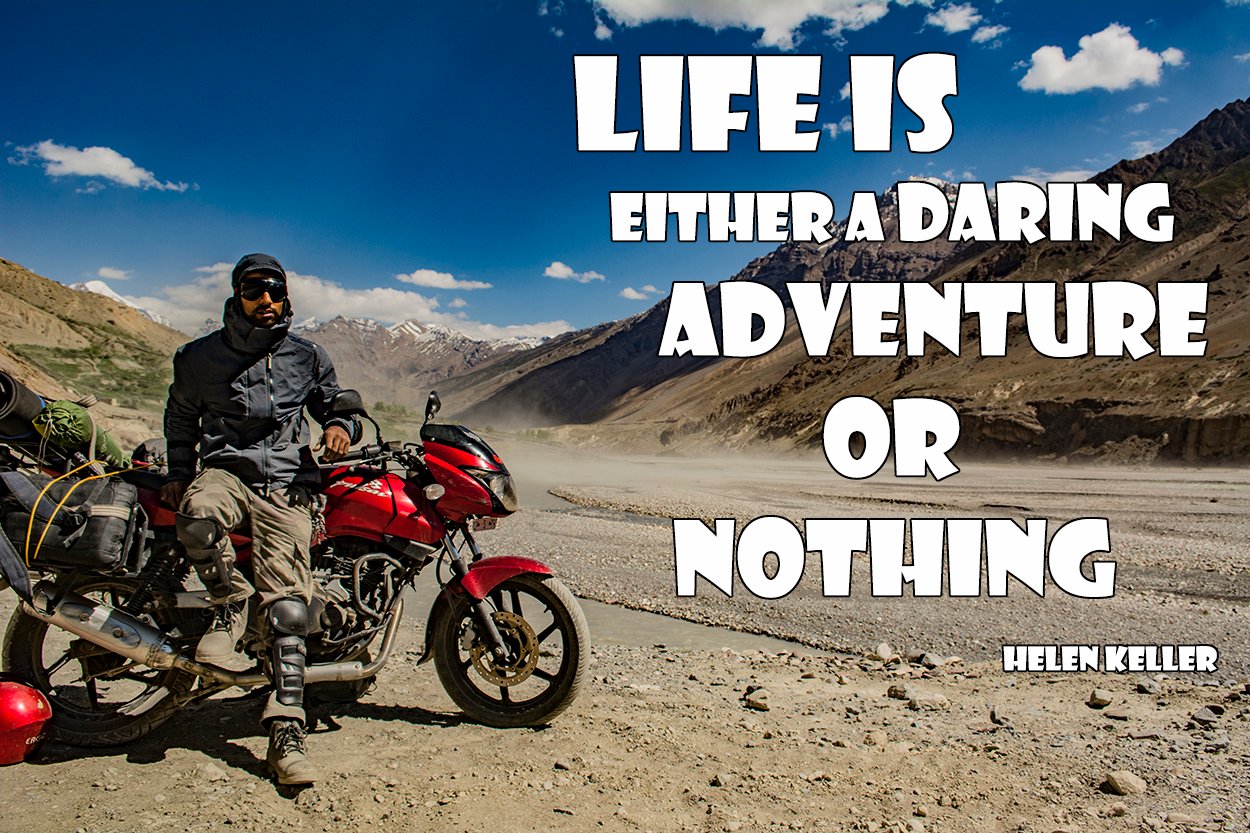
Many years ago, my father happened to stay in Lahaul and Spiti Valley. He told me stories about its raw and uninviting nature (and thus helping me in this Spiti Valley itinerary).
It was from him that I knew how disconnected this place can feel. Time has changed though. Daily morning buses now connect Spiti Valley to its neighbours. Private cars and taxis also, at times, are quite visible.
That doesn’t make a Spiti Valley road trip any less adventurous.
It takes a certain kind of madness to drive through Spiti Valley’s raw, unforgiving landscapes. And if you’re planning a solo Spiti Valley bike trip, you need more than enthusiasm — you need preparation.
I remember when I was planning my itinerary, I was a little scared too. But to hell with it, I still decided to go ahead!
Update in 2026: Since Spiti Valley has grown in popularity over the years and has got crowded if you’re looking for something more adventurous do Shinkula Pass in Zanskar. Connecting Keylong to Kargil, this route was opened in 2019.
Now coming back to the original topic, let’s discuss…
An Introduction to Spiti Valley
A complete Spiti Valley circuit covers roughly 700–1000 km, depending on your chosen route and detours.
You can also complete the journey the other way around – by starting from Manali, and following the tribal circuit until you reach Shimla.
But I would personally advise you to start from Shimla. And that is because if you start from Shimla, it would be easy for you to acclimatise to high altitude. Moreover, the road conditions from Manali to Spiti Valley are bad. Check out the below video published on my YouTube channel that will give you a fair idea of Spiti Valley road conditions if you are travelling from Manali…
Also, before you begin your journey, do not forget to ensure that Kunzum Pass is open (remains closed in winter).
Though the route will remain open from Shimla to Spiti Valley, but only until Losar. After a few kilometres from Losar (if Kunzum Pass is closed) you will have to turn around and repeat the circuit – Losar to Shimla (as shown in the map below).
You can check the status of the Kunzum Pass on the Himachal Tourism website or by calling the HRTC department.
Here’s the Delhi to Spiti Valley route map. It took me 9 days to complete the itinerary solo, while camping on the way:
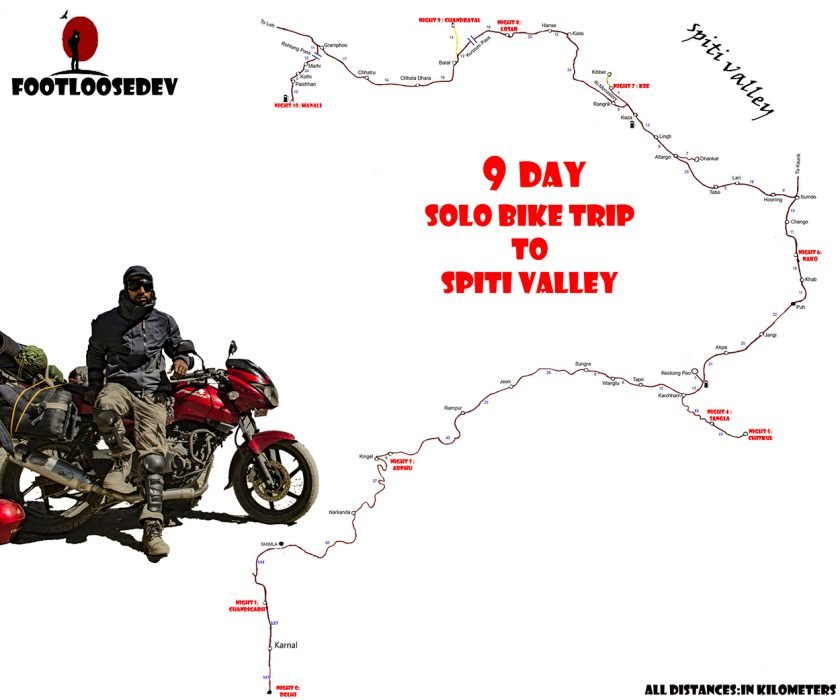
You may also be interested in reading this article on my blog focusing on tips for Budget Spiti Valley tour where I’ve shared a complete, day-by-day itinerary for Spiti Valley focusing on camping throughout the journey. By doing this, you can save 100% on accommodation.
This is how I spent only 5000 Rupees to do the entire journey from Delhi to Spiti Valley, including food, fuel and accommodation costs.
If you choose to camp, be prepared. Spiti Valley is harsh and unforgiving (see these Spiti Valley pictures to get the idea) and a budget camping trip amplifies that reality.
Now let’s begin the itinerary…
Delhi to Spiti Valley Road Trip Itinerary
The following route I stayed at very offbeat places (because I was camping). If you are not camping, and you are short of time, you can do…
Day 1: Delhi – Narkanda
Day 2: Narkanda to Kaza
Day 3: Spend a Day in Kaza and explore Key, Kibber, Langza
Day4: Kaza to Manali
Day 5: Manali to Delhi
But if you’re not short of time, and want to do the circuit in a relaxed pace, try the following 9-day itinerary…
Day 1: Delhi to Chandigarh
Before leaving home, I had decided one thing — I was going to travel slow. Not just to enjoy the movement, but also to save myself from a sore back too early in the journey.
Day 1 of my Spiti Valley itinerary began at 4 AM. The highway was empty, smooth, and inviting. Within four hours, I had covered the 250 km stretch from Delhi to Chandigarh.
It was the only night during this entire Spiti Valley road trip when I didn’t camp.
If you prefer longer drives, you can push further to Matiana (near Narkanda) on Day 1 itself. Delhi to Matiana takes around 8 hours. I stopped in Chandigarh simply to keep the ride relaxed and unhurried.
As mentioned earlier, I camped throughout my 9-day Spiti Valley bike trip. (You can read my detailed camping guide separately by clicking here: camping In Spiti Valley)
Day 2: Chandigarh to Matiana
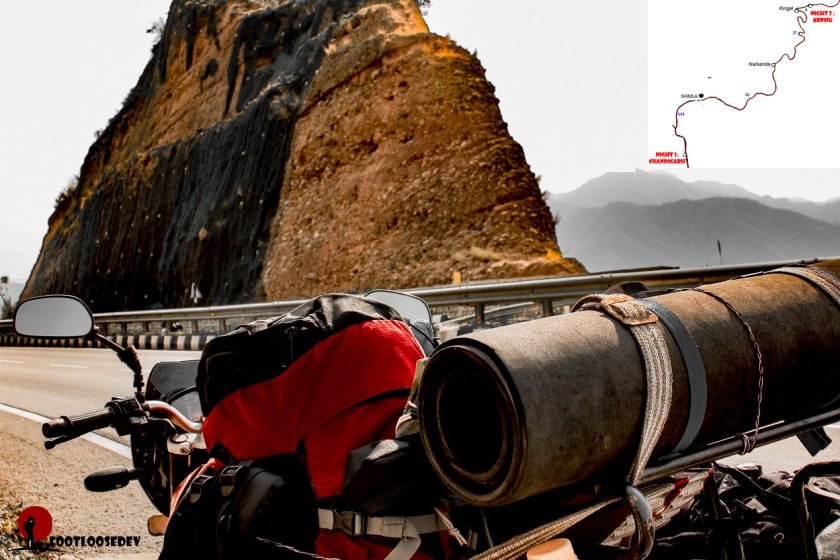
From Chandigarh, it takes about 1.5 hours to reach Shimla — traffic permitting.
The road toward Shimla and further ahead remains mostly smooth and well-maintained throughout the year, making this part of the Spiti Valley route comfortable.
Most travellers from Delhi spend a night in Shimla. I suggest skipping it and driving further toward Narkanda. Matiana, a small and offbeat village near Narkanda, offers far better mountain views and fewer crowds.
I camped in Matiana. The village had only a couple of homestays and a handful of local houses. With almost no tourism around, I was invited by a local family for dinner — something that happens often in remote Himachal villages.
That’s how my camping journey truly began. From Day 2 onward, I rode solo and camped solo for the rest of this Spiti Valley bike trip.
Day 3: Matiana to Sangla
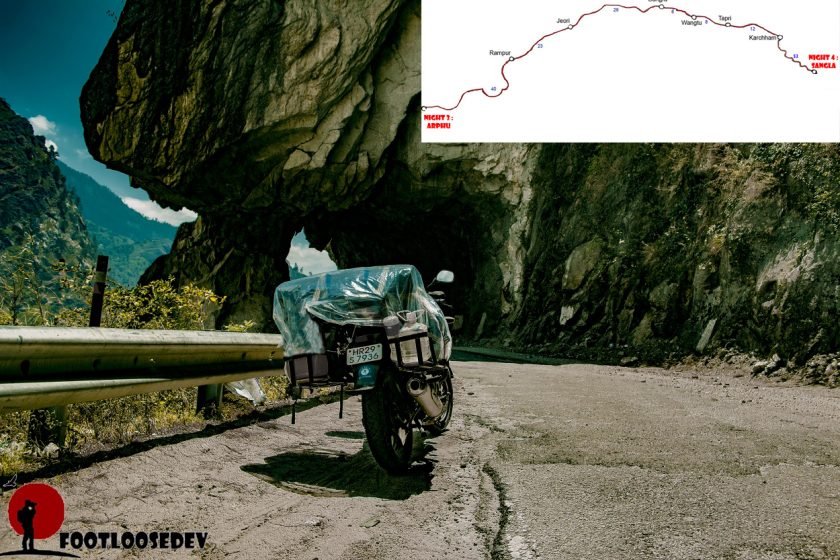
Day 3 began with a light drizzle — Kinnaur can surprise you with sudden showers, so always carry rain protection. Spiti Valley itself is much drier, but the Kinnaur stretch can be unpredictable.
The road up to Tapri is mostly good. From Tapri to Sangla, you’ll encounter rough patches.
Tapri also has a natural hot spring about 2 km away from town — a perfect stop to relax during your Spiti Valley road trip. I spent enough time there that I couldn’t make it to Chitkul and stayed in Sangla instead.
Tapri has a petrol pump — useful if you’re detouring toward Chitkul, often called the last Indian village.
Chitkul has gained popularity in recent years for its scenery and pleasant climate. Many standard Spiti Valley itineraries skip it because it adds roughly 150 km to the total Delhi–Spiti circuit.
But if you have an extra day, Chitkul is worth the detour.
I camped in Sangla, about 20 km before Chitkul.
Day 4: Sangla to Chitkul
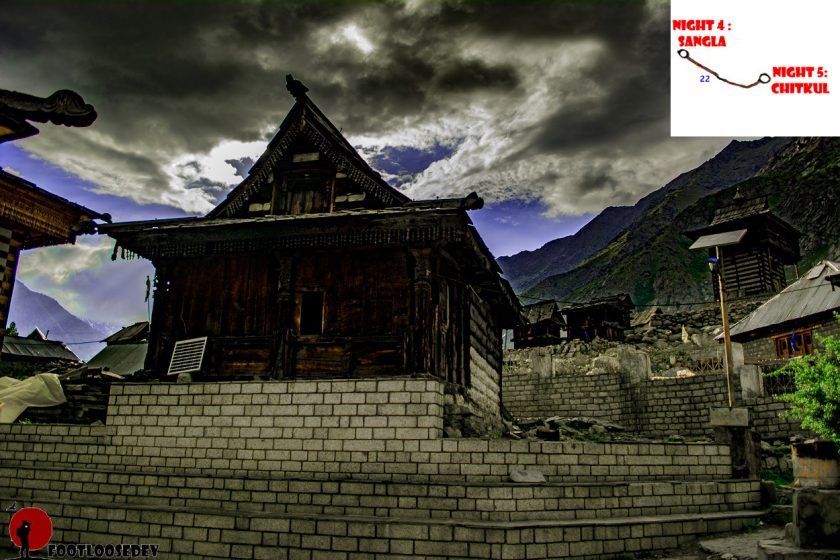
You feel the shift in landscape as soon as you enter Sangla Valley [see these Chitkul Pictures to get an idea]. Snow-capped peaks rise dramatically above traditional Tibetan-style wooden houses.
A stream runs alongside the narrow road, which remains mostly in good condition. The drive feels surreal — almost heavenly.
Chitkul sits quietly near the Indo-Tibetan border, just before the terrain begins transitioning toward Spiti.
The 500-year-old Mathi Temple, dedicated to local deities and featuring Buddhist iconography, is the town’s spiritual heart. It is also considered the final stop of the Kinner Kailash Parikrama.
Accommodation in Chitkul ranges from campsites (around ₹1500 per night) to modest guesthouses. I camped again — for free.
If you’re planning only a Delhi to Chitkul trip, I’ve written a separate detailed guide for that journey. Read here: Delhi to Chitkul blog.
Day 5: Chitkul To Nako
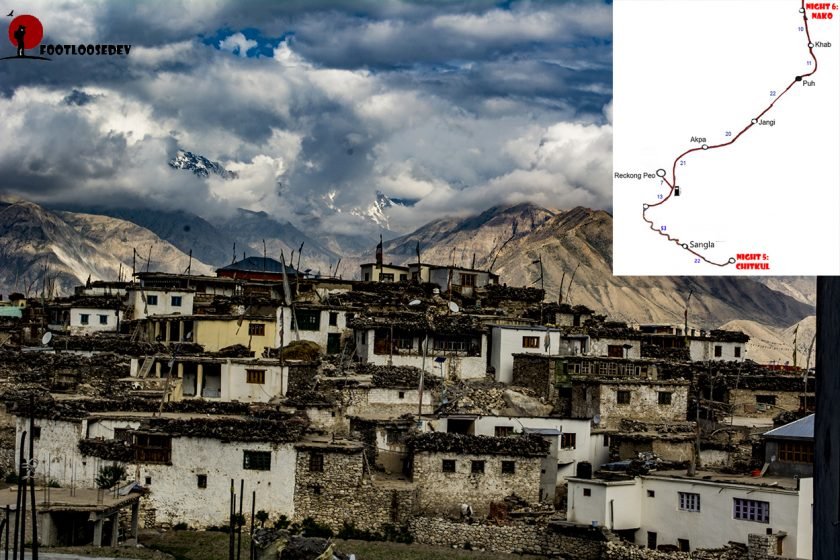
This leg of my Spiti Valley bike trip took me from Chitkul to Nako.
The stretch between Chitkul and Karcham is mostly downhill — you can almost coast through parts of it.
Rekong Peo lies less than an hour from Karcham. Indian travellers can skip it unless refuelling. Foreign nationals, however, must obtain permits there for entry into Spiti Valley.
Important: Rekong Peo has the last petrol pump before Kaza — nearly 200 km away. Fill up here.
After Puh, you’ll encounter your first registration checkpoint.
The road toward Nako becomes rough, but the dramatic hairpin bends and widening valley views compensate for it.
It took me around five hours to reach Nako.
Nako is a quiet Himalayan village with wide views and affordable stays. Nako Lake didn’t impress me much, but the 15th-century Nako Monastery did — it even allowed me to camp inside its premises, a highlight of my Spiti Valley itinerary.
Day 6: Nako To Kaza
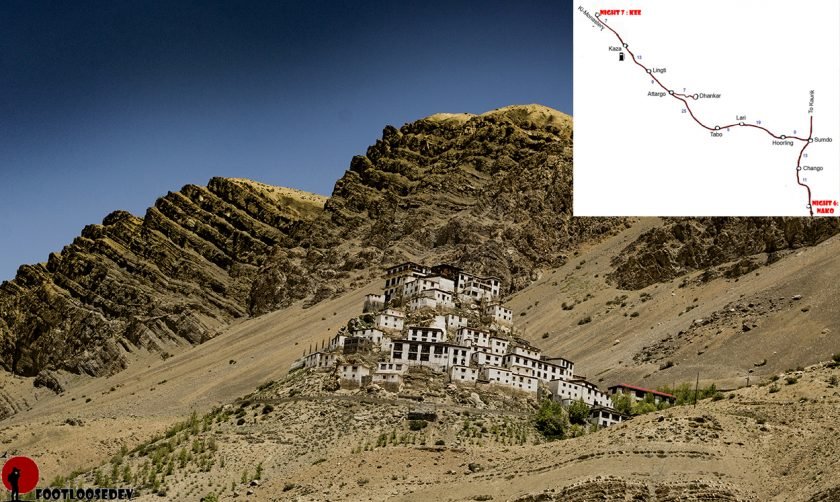
Day 6 of my Spiti Valley trip finally took me toward Kaza — the heart of Spiti Valley. However, I chose to stay in Key instead of Kaza.
Key Village, near the famous Key Monastery, is quieter and less commercial than Kaza. Rangrik is another peaceful alternative.
The 13th-century Key Monastery sits dramatically above the valley and is one of the most iconic landmarks of any Spiti Valley trip.
I wasn’t allowed to camp inside the monastery premises, but the village offered enough open spaces for camping.
The drive from Nako to Key is scenic and expansive. After crossing Tabo, the valley opens dramatically. The landscape grows wider and more desolate as you approach Kunzum.
This is where the true character of Spiti Valley begins to reveal itself.
Day 7: Key To Losar
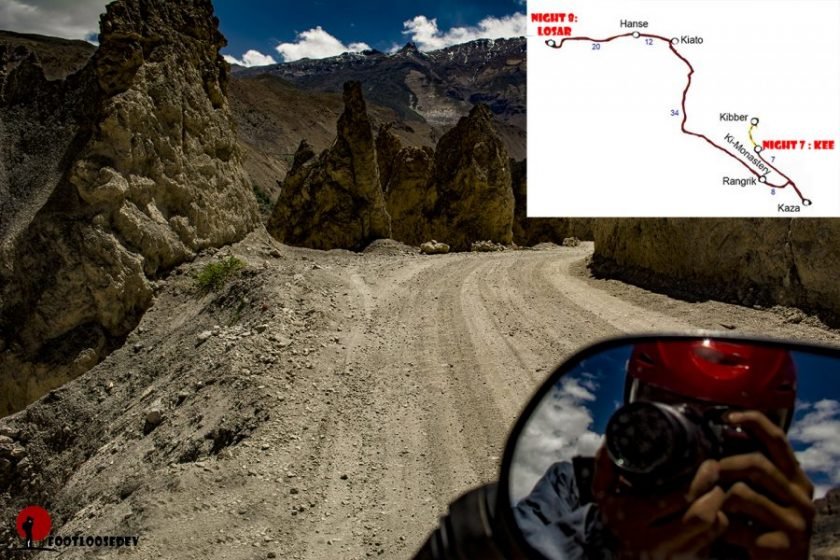
Kaza, being the district headquarters, has the only petrol pump within a 200 km radius. Any Spiti Valley itinerary must pass through Kaza for refuelling.
From Key, it takes just 15 minutes to reach Kaza.
After topping up fuel, I rode toward Losar — a 3–4 hour journey through dramatic terrain.
Losar feels like a hidden Shangri-La. Peaceful, scenic, and far less crowded.
Locals allowed me to camp inside private property for safety. Several homestays are also available here.
Day 8: Losar To Chandratal

From Losar, you gradually leave Spiti Valley and enter Lahaul via Kunzum La.
Brace yourself — this stretch has some of the worst road conditions of the entire Spiti Valley road trip.
After crossing Kunzum Pass, descend toward Batal and look for the narrow diversion toward Chandratal.
This 12.5 km stretch is single-lane and demands patience.
When driving solo, stay alert for oncoming vehicles. Use wider patches to let others pass.
Chandratal, at 4,300 meters, is a highlight of any Spiti Valley bike trip. Surrounded by towering peaks and a dramatic glacial cirque, the lake feels otherworldly.
Vehicles can reach close to the parking area. From there, it’s a 10-minute walk to the lake.
There are no permanent guesthouses — only seasonal camps (₹1500 per person including meals). I camped independently once again.
By now, even I was starting to miss a proper bed.
Day 9: Chandratal to Manali
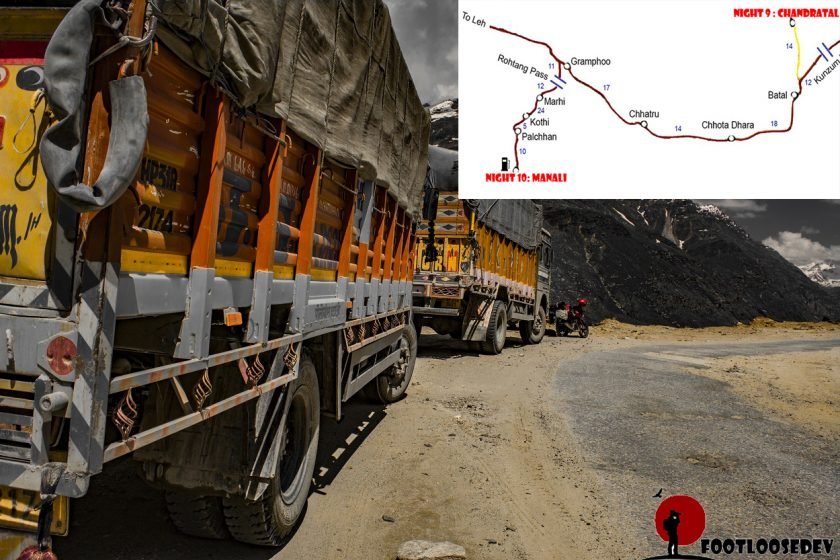
Return to the main road via Batal.
The Chandratal–Batal stretch is pure off-road. Drive slowly.
The 50 km stretch from Batal to Gramphoo can take 4–5 hours due to broken terrain.
Eat well at Batal dhabas — the next proper stop may take time to reach.
After Gramphoo, you climb toward Rohtang Pass. Expect fog, rain, and heavy tourist traffic — a stark contrast to the isolation of Spiti Valley.
Descending from Rohtang, you enter Solang Valley and eventually reach Manali.
After days of camping, I finally took a room.
And that marked the end of my Spiti Valley road trip.
From Manali, you can extend your journey toward Sach Pass — another epic Himalayan route worth exploring.
Tip: If you are looking for a group tour, take a look at these Spiti Valley packages. I would also like to suggest that it’s not necessary to do a group tour to Spiti Valley as the entire route is very commercial now and you will find many travellers on the way. So, a self-planned (or even a solo trip) is totally safe.
Shimla vs Manali Route for Spiti Valley: Which Is Better?
If you’re planning a Spiti Valley road trip, the biggest decision is choosing your route — via Shimla or via Manali.
Shimla route (Delhi–Shimla–Kalpa–Nako–Tabo–Kaza) is the safer and smarter option for most travellers.
The altitude gain is gradual, which helps with acclimatisation and reduces the risk of AMS. Road conditions are mostly stable, and this route remains open for a longer duration each year. If this is your first Spiti Valley trip, or you’re travelling solo or with family, start from Shimla.
Manali route (Delhi–Manali–Rohtang–Gramphoo–Kunzum–Kaza) is shorter but far more challenging. The climb to Kunzum Pass (4,551 m) happens quickly, and the stretch from Gramphoo to Batal includes broken roads, gravel, and water crossings. The Manali to Kaza road condition is still rough in parts and usually remains open only between June and October. This route is better suited for experienced riders and adventure-focused travellers.
For a complete Spiti Valley itinerary, the ideal plan is simple:
Enter via Shimla for gradual acclimatisation and exit via Manali for dramatic landscapes.
If choosing only one route, Shimla is safer. Manali is tougher — but more thrilling.
Best Time To Visit Spiti Valley
The best time to visit Spiti Valley depends entirely on what kind of Spiti Valley trip you are planning.
If you’re planning a Spiti Valley road trip from Delhi via Shimla, the route remains open throughout the year (barring heavy snowfall disruptions). However, if your Spiti Valley itinerary includes Manali and Kunzum Pass, the ideal season is between June and October, when Kunzum La remains open.
Summer (May–June)
Perfect for a first-time Spiti Valley trip. Roads are accessible, weather is pleasant, and villages like Kaza, Kibber, Langza and Tabo are fully operational. Expect daytime temperatures between 10°C to 20°C.
Monsoon (July–August)
Spiti Valley itself is a cold desert and receives very little rainfall. However, landslides are common in Kinnaur and on the Manali route. Road conditions can deteriorate quickly.
Autumn (September–October)
Arguably the best time for a Spiti Valley bike trip. Clear skies, fewer tourists, stable roads, and dramatic mountain colours make it ideal for photographers.
Winter (November–March)
Spiti Valley turns into a snow-covered isolation zone. The Manali route closes, and access is only possible via Shimla. Winter is perfect for snow leopard expeditions, but travel conditions become extreme.
So, if you are searching for, best month to visit Spiti Valley, I will say, it is winter for snow adventure. Many people have been doing winter Spiti in the recent years. If you are doing a bike trip, Autumn is the best season because this is when the river crossings are the easiest.
Plan your itinerary accordingly. Make sure Kunzun Pass is open if you are planning to do the entire Spiti circuit.
Top Places To Visit In Spiti Valley
A complete Spiti Valley itinerary is incomplete without exploring its ancient monasteries, high-altitude villages, and surreal landscapes.
Most of the tourist highlights are located close in or around Kaza. I have created a Youtube video how we covered most of the tourist highlights in Spiti Valley in a day while making Kaza our base. Check it out below…
Key Monastery (Ki Monastery)
Perched at 4,166 meters above sea level, Key Monastery is the largest and most iconic monastery in Spiti Valley. Dating back to the 11th century, it belongs to the Gelugpa sect of Tibetan Buddhism.
Overlooking the Spiti River, the monastery resembles a fortress from a distance. Inside, you will find ancient murals, thangkas, scriptures, and prayer halls. Spending time here during morning chants is one of the most immersive experiences during a Spiti Valley trip.
Also Read: Namdroling Bylakuppe Monastery (the largest monastery in South India)
Tabo Monastery
Often called the “Ajanta of the Himalayas,” Tabo Monastery was founded in 996 CE. It is one of the oldest functioning Buddhist monasteries in India.
The monastery houses priceless murals, stucco sculptures, and ancient manuscripts. If you’re planning a slow Spiti Valley itinerary, spending a night in Tabo is highly recommended.
Dhankar Monastery & Dhankar Lake
Located dramatically on a cliff between Kaza and Tabo, Dhankar Monastery once served as the capital of the Spiti Kingdom.
A short 1-hour trek from Dhankar village takes you to Dhankar Lake, offering panoramic views of snow-clad peaks and turquoise waters. It’s a must-do for those looking for light trekking experiences during their Spiti Valley road trip.
Hikkim, Komic & Langza
These three high-altitude villages near Kaza are highlights of any Spiti Valley bike trip.
Hikkim houses one of the world’s highest post offices.
Komic claims to be one of the highest motorable villages in the world.
Langza is famous for its giant Buddha statue and marine fossils.
The drive through these villages defines the raw charm of Spiti Valley.
Pin Valley National Park
Located near Attargo Bridge, Pin Valley National Park is known for its rugged terrain and rare wildlife including the elusive snow leopard.
If you want to add wilderness to your Spiti Valley itinerary, Pin Valley is worth exploring.
Spiti Valley Road Trip: Essential Travel Tips
Planning a Spiti Valley road trip requires preparation. This is not a casual weekend getaway.
1. Acclimatization Is Crucial
Spiti Valley sits at an altitude of 3,000–4,500 meters. Spend gradual nights increasing altitude — which is why starting from Shimla makes more sense than Manali.
2. Fuel Availability in Spiti Valley
The only reliable petrol pump in Spiti Valley is in Kaza. Always refuel whenever possible.
3. Carry Cash
ATMs are limited. Carry sufficient cash for your entire Spiti Valley trip.
4. Network Connectivity in Spiti Valley
BSNL and Jio work intermittently in Kaza. Do not expect consistent connectivity.
5. Vehicle Preparation
For a Spiti Valley bike trip:
- Ensure good tyre condition
- Carry puncture repair kit
- Avoid riding after dark
For cars:
- Prefer SUVs with good ground clearance
- Avoid low-clearance hatchbacks on the Manali route
Where To Stay In Spiti Valley
Accommodation options in Spiti Valley have expanded significantly over the years.
In Kaza, you’ll find:
- Budget guesthouses
- Boutique stays
- Cafés with WiFi
- Hostels for backpackers
In smaller villages like Langza, Kibber, and Tabo:
- Homestays dominate
- Expect basic rooms with home-cooked meals
- Chandratal offers only tented camps (seasonal).
If you’re planning a Spiti Valley trip on a budget, homestays are affordable and culturally immersive.
Is Spiti Valley Better Than Ladakh?
This is a common question.
Spiti Valley is:
- Less commercialised than Ladakh
- More raw and isolated
- Culturally Tibetan
- A true cold desert
If you prefer cafés, infrastructure, and comfort — Ladakh may feel easier.
If you prefer dramatic landscapes, raw roads, and deeper cultural immersion — Spiti Valley feels more authentic.
How Many Days Are Enough For Spiti Valley?
A minimum of 7–9 days is ideal for a complete Spiti Valley circuit.
Short on time?
A 5-day Spiti Valley itinerary covering Shimla–Kaza–Manali is possible but rushed.
If you’re coming from Delhi, plan at least 8–10 days for a comfortable Spiti Valley road trip.
Is Spiti Valley Safe For Solo Travel?
Yes, Spiti Valley is safe for solo travellers, including solo riders.
Locals are helpful, crime rates are extremely low, and tourism infrastructure is improving every year.
However, weather unpredictability and altitude remain the biggest risks — not people.
Conclusion: Spiti Valley Is Still Worth Visiting
Yes, Spiti Valley has grown popular. Yes, roads are better. Yes, tourism has increased.
But the vastness of its landscape still dwarfs human presence.
The moment you cross Tabo and the valley opens up toward Kaza, you realise — this is not just a destination. This is an experience.
And no Spiti Valley itinerary can ever fully prepare you for that feeling.
Also Read: Jammu To Killar Itinerary
Have you ever attempted a solo Spiti Valley bike trip? How was your experience? Also, would you like to add anything to this itinerary? Please share in the comments below!
If you have a question or would like to connect, please find me on Instagram.