Ever tried hitchhiking in India? I once did it from Leh to Srinagar and it was a wonderful experience.
Contrary to what most people think, it is easy to hitchhike in India.
People in India are moreover very helpful, especially in the mountains, so finding lifts and hitchhiking in India is generally no problem.
I have always loved hitchhiking, and this is for two reasons: one, it makes my journeys cheaper; and two, it allows me to meet some of the most helpful and interesting people out there. For example, during my Sandakphu trek, I hitchhiked, saved myself more than 5,000 Rupees and found two very great people.
And it’s not just India. Other than hitchhiking in India, I’ve done this in Europe and Southeast Asia too. It remains one of those budget travel tips that I find not only saves me money but gives great experiences too.
I, moreover, don’t find hitchhiking risky. In my belief, the misconception that hitchhiking is dangerous has only been spread around by the fear-mongering society!
Hitchhiking In India
… my Leh To Srinagar Journey!
My Leh to Srinagar journey was the first-ever hitchhiking experience in India.
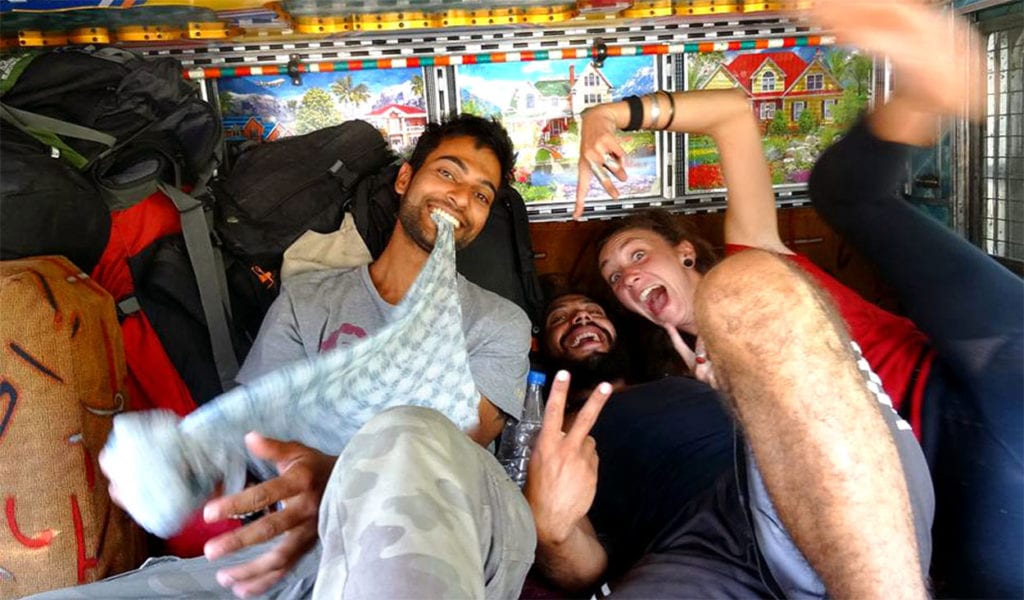
It happened when I met David and Marion on a chilly October evening in Leh. We teamed up to see if we could do it from Leh to Srinagar – a 420 km long and isolated road with some of the most popular towns in between, including Kargil and Dras (the second coldest inhabited place on Earth).
I have seen people hitchhiking from Manali to Leh because of regular ongoing traffic but Leh to Srinagar route was new for someone to try.
Our shabby and hopeless scheme – as it seemed at first – started in Leh, and as expected we found ourselves standing on National Highway 1D on day 1 with our thumbs out, attempting to look as friendly as possible with an amiable smile on our faces, for the passing drivers. And pass they did. One after another.
Hitchhiking in India in Ladakh with two foreign backpackers seemed a little unsure in the beginning. And to make it even worse, all three of us were having our massively looking rucksacks – something so heavy that it would even force a bus driver to pull a face before allowing us through.
But after almost 2 hours of waiting, we finally found some time.
To my experience, it wasn’t anything like hitchhiking in Indian cities, where cars move reasonably fast, and drivers, who don’t intend to stop, scarcely spare you a glance.
Here, in Ladakh, things move excruciatingly slowly. In fact so slow that you get a fair amount of time to make appealing eye contact with the driver to plead for a ride, which soon turns into an implored beseech before you get rejected – and that is the hardest part to accept. Because at every rejection, you have to muster all the self-respect and start right from the beginning.
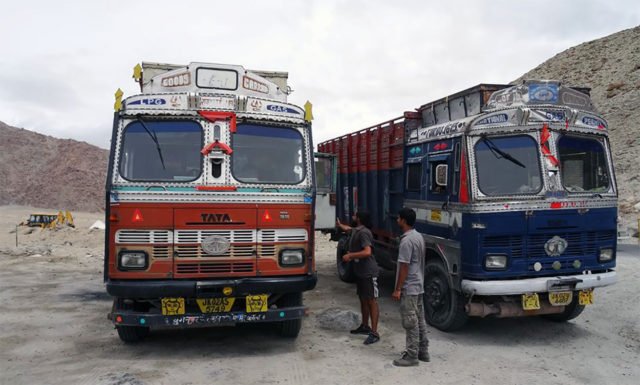
But my first hitchhiking experience in India wasn’t that bad either. We managed to find quite a few Indian Oil truck drivers who were happy to drop us off.
Where a state bus takes two days to do the Leh to Srinagar journey, we took three days. We stayed in Lamayuru and Dras on our way.
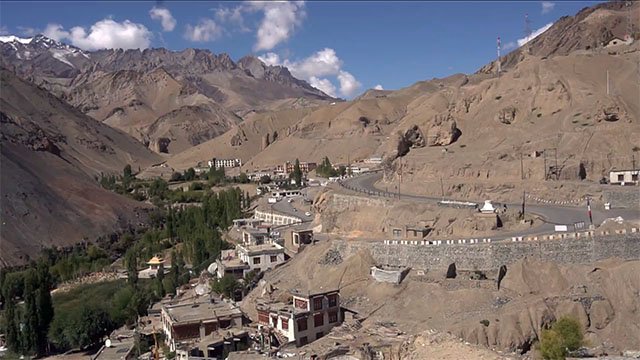
I particularly liked and recommend ‘Lamayuru’ a small Buddhist village between Kargil and Leh. It was, by far, one of the best places I’ve seen in J&K. We decided to spend a night at Lamayuru but ended up staying three, and I can’t wait to go back.
Dras was okay, given it’s the second coldest inhabited place on earth, it was worth a night. But getting a ride from Dras turned out to be the toughest part. “We are never going to get picked up,” I remember admitting it every time a truck had forsaken us.
It took more than three hours to find our next ride in Dras. Despite moving at a maximum speed of 15 km an hour, it screeched to a stop making a cloud of gravelly dust. David and I stood transfixed as Marion spoke to the driver – and in the fullness of time – we finally got a ride all the way to Srinagar.
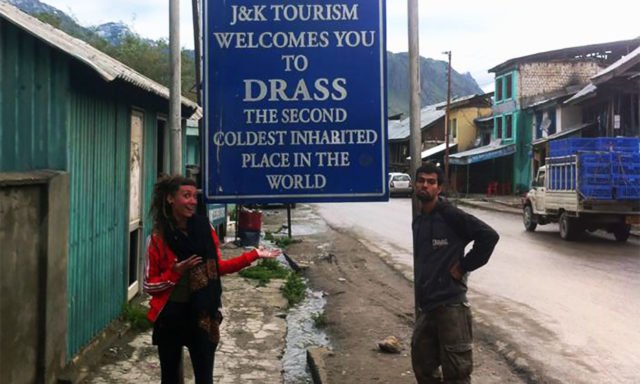
Trucks have been picking up hitchhikers in India for decades. Our first ride ever was with Satinder, a 46-year-old man from Punjab who has been driving for Indian Oil for the past 20 years on the Leh to Srinagar road, and it was quite a job.
According to him, they’ve to complete a minimum of three rounds of delivery from Leh to Srinagar every month and get paid around INR 7,000 for each round. He tries to do as many as five rounds a month to earn more, but this means long, continuous rides. Sure, life as a truck driver in India is tough.
And then there are the ridiculous stories too: hauling strange loads, overloading, horrific accidents, disfavour by police and all those disdained looks by car drivers.
Where most people think hitchhiking is risky and often demotivates others to do it, I found it rather otherwise. It is fun and gives you many great travel memories.
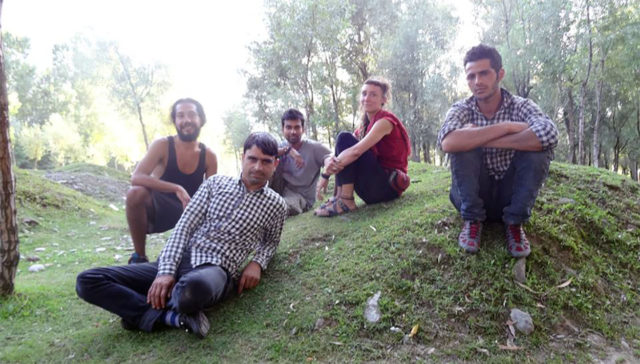
My first experience of hitchhiking in India was indeed a great experience. And thanks to David, Marion and all those drivers we met on the road, I tried more of it as I covered more holiday destinations in India, especially while travelling in Gujarat.
If you will read my Kutch travel guide you will see that the very reason that I could solo backpack there was that I hitchhiked. Since public transport is bad in Kutch and I didn’t want to spend too much money on taxis, getting free lifts was the only option.
Hitchhiking in India is certainly worth trying. And I would suggest others do it too, at least once.
What Hitchhiking in India Really Feels Like
In India, hitchhiking is unpredictable — and that unpredictability is exactly what makes it special. One day you might get picked up by a truck driver who shares chai and life stories; the next day you might wait two hours before a single vehicle stops. India is not Europe or Australia where hitchhiking culture is normalized. Here, it is more about human curiosity and kindness than established travel culture.
People often stop not because hitchhiking is common, but because they are curious. They want to know why you are doing this, where you are from, and what your story is. That curiosity becomes your biggest advantage if you remain polite and approachable.
While hitchhiking in India, choosing the Right Location Matters More Than Luck
In my experience, the success rate of hitchhiking in India depends heavily on where you stand. If you position yourself randomly on a busy urban road, chances are very low. However, near toll plazas, petrol pumps, highway intersections, or dhabas, your chances multiply.
Highways connecting tourist towns or hill stations are significantly better than industrial highways. Roads leading to places like Manali, Rishikesh, Goa, or the Northeast tend to have drivers who are more open to picking up strangers because they are already used to seeing travelers.
The small detail of standing where vehicles can safely slow down makes a huge difference. Drivers will not risk sudden braking for you, no matter how friendly they are.
Appearance and Body Language Influence Trust
When people research how to hitchhike in India safely, they often overlook appearance. In India, first impressions matter a lot. Dressing simple, clean, and non-flashy instantly makes you look more trustworthy. A small backpack signals “traveler.” A massive trekking load sometimes signals “problem.”
I’ve noticed that smiling, making eye contact, and maintaining relaxed body language works better than aggressively waving hands. Hitchhiking is not begging for a ride; it is silently requesting goodwill.
Useful Tips For Hitchhiking in India
The Power of a Destination Sign
A cardboard sign with your destination written clearly increases success more than anything else I have tried. When drivers instantly know where you want to go, decision-making becomes easier for them. Writing the city name in English plus the local script builds immediate connection.
For example, writing “JAIPUR / जयपुर” or “MANALI / मनाली” shows effort and respect. It tells locals that you are not just another random passerby; you are a traveler who values communication.
Conversations Before Entering the Vehicle
One of my strongest learnings from hitchhiking across India is to always talk before sitting. Even a 30-second conversation reveals the driver’s mood, intention, and comfort level. I casually ask where they are headed and whether dropping me along the way is okay.
Money is another topic to clarify indirectly. While most rides are genuinely free, some drivers might expect fuel contribution. A simple polite clarification avoids awkwardness later. Hitchhiking should never feel like a negotiation — it should feel like mutual understanding.
Regional Differences You Should Know
Not all regions in India behave the same when it comes to hitchhiking culture. Mountain states like Himachal Pradesh, Uttarakhand, Sikkim, and Ladakh are far more receptive. Drivers there are used to backpackers and road travelers. Coastal belts like Goa and parts of Kerala are also relatively easy.
In contrast, dense urban outskirts or industrial highways can be challenging. People there are usually in a hurry and less inclined to stop. Understanding these regional differences helps set realistic expectations and reduces frustration.
Always Keep a Backup Plan
No matter how confident you become in hitchhiking through India, always have a fallback option. Buses, shared taxis, and trains are widely available and affordable. Hitchhiking works best when it is a choice, not a compulsion. The moment it becomes a necessity, stress replaces adventure.
Safety While Hitchhiking in India
Safety is the most searched concern around hitchhiking in India, and rightfully so. I personally follow small habits that reduce risk without killing the adventure. Sharing live location with a friend, noting vehicle numbers, and keeping valuables close are simple but effective steps.
I also avoid hitchhiking late at night unless I am in a tourist-friendly mountain region. Daylight naturally adds a layer of safety. Trusting intuition is crucial — if something feels off, politely decline. Saying “No” confidently is more important than being polite.
Final Thoughts on Hitchhiking in India…
Hitchhiking in India is not merely about reaching a destination without spending money. It is about conversations, cultural exchange, spontaneity, and stories you will retell for years. The roads of India are chaotic, colorful, and deeply human.
If you approach hitchhiking with awareness, patience, and respect, the journey often becomes richer than the destination itself.