I happened to visit and write this Ahmedabad travel guide out of my nearly 1-week stay there. I explored some of the popular stepwells in Ahmedabad, including the most famous Adalaj stepwell, among others.
Also, I luckily ended up being in the city during Uttarayan which is considered to be the best time to visit Ahmedabad.
So out of my 1-week stay and exploring, I am writing this detailed travel guide. From where to stay in Ahmedabad to how to best enjoy it on a heritage walk, you will get all necessary tips here.
Ahmedabad Travel Guide
I headed to Ahmedabad, not because it was a logical destination for an Indian backpacker like me. The French haveli I was going to stay at was, in fact, the original fascination. I mean the idea of staying in a 150-year-old Gujarati haveli, would tempt anyone, and I was no different. Then later I found that the Haveli was moreover located in a 400-year-old walled community of Dhal ni Pol.
As I got off the auto-rickshaw at Raipur Darwaza and slowly walked inside the gated community of Dhal ni Pol, the Kites, a few dozen of them, suddenly appeared in the sky.
I happened to be in Ahmedabad a few days before the kite festival Uttarayan, a holiday also known as Makar Sankranti in North India. This was indeed the best time to visit Ahmedabad. Dramatically colourful street scenes and many lively conversations were only waiting for me in the days to come.
As I walked a little deeper in the neighbourhood where my hotel was located, I found the many happy locals sitting outside their tiny homes, as if only waiting to welcome me. Some were even peering from their ancient-looking window, sharing a confused look with me, before pointing to their neighbour my 60 ltr rucksack.
As I struggled through a few intermingled by-lanes of Dhal ni Pol, and before I could even reach my place, I was stopped by a curiously looking family, asking for my whereabouts. The youngest of all, probably in his late teens, spun an immediate invitation to join them for kite flying.
The Best Time to Visit Ahmedabad: Uttarayan
You can visit Ahmedabad between October and March when the weather is forgiving, but if you want to see the city’s soul, visit during Uttarayan (January 14th).
I grew up in North India celebrating this transition of winter to spring as Lohri—standing around a massive bonfire. But in Gujarat, Makar Sankranti is synonymous with kite flying, and Ahmedabad takes it to an absolute extreme.
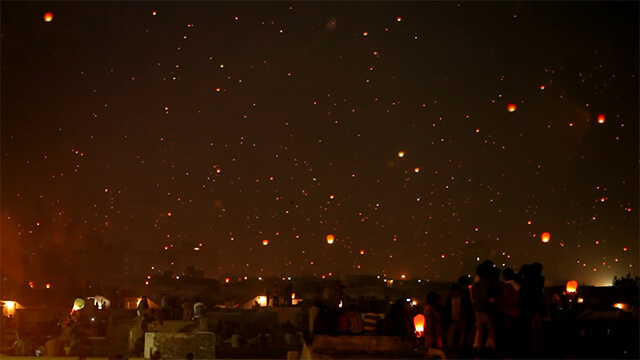
For days before the festival, the old town markets are hijacked by kite vendors coating glass powder onto flying strings, their hands dyed red, yellow, and green. On the main day, the entire town moves to their rooftops. Millions of kites claim the sky, and by sunset, the paper kites are replaced by glowing paper lanterns. It feels like a city-wide carnival.
Insider Tip: If you visit in summer (April to June), be prepared for blistering heat. I highly advise against it unless you plan to stay indoors during the day.

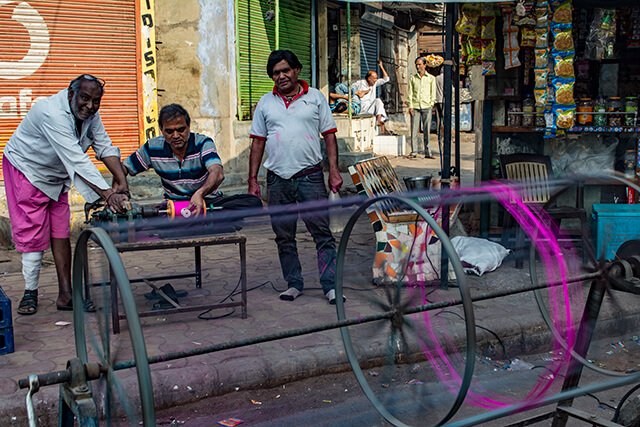

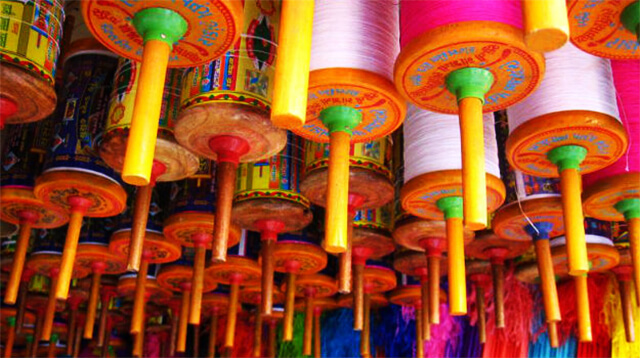
As I reached Ahmedabad, a couple of days before Uttarayan, I found almost every local vendor busy coating the glass powder for the kites’ flying and fighting string – with their hands painted in red and yellow and green. From mobile kite vendors to big shop sellers – everyone was dwindling with their share of the ration.
The day of Uttarayan only provided what was expected, perhaps to the next level. The entire town could be seen on their terrace eating and celebrating. A few thousand kites (creating confusion about which one belonged to whom) claimed the skies. They were everywhere — in the sky, on treetops, on cables. The atmosphere was not short of a carnival. Festivities were in the air!
Later in the evening, after the sunset, the night festivities began. People released paper lamps. The sky was now filled with floating lights. The entire sight was phenomenal — something that I had never experienced anywhere else in India before.
No wonder, Uttarayan is the best time to visit Ahmedabad.
Top Things to Do in Ahmedabad
While most itineraries will aggressively point you toward modern museums, the real charm of Ahmedabad is in its dust, its architecture, and its history.
1. Get Lost in the Ahmedabad Pols
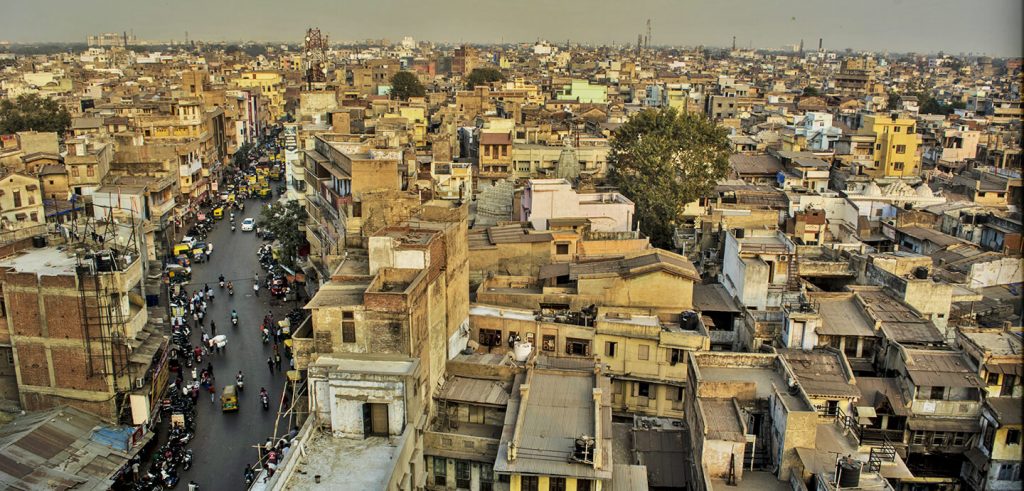
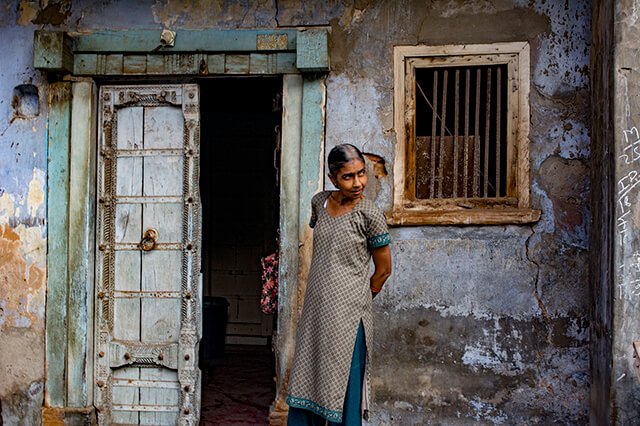
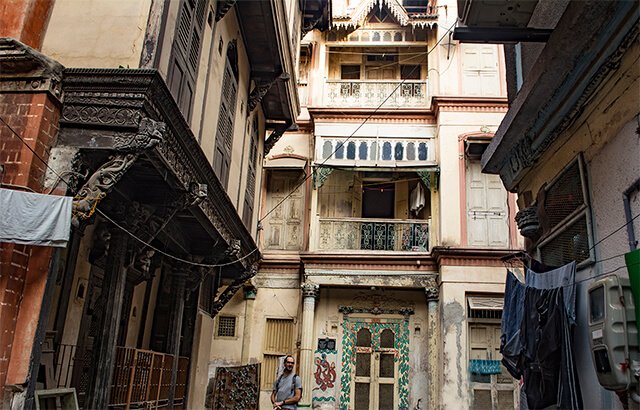
Pols are traditional housing clusters in the old city, historically grouped by caste, religion, or profession. Walking through these narrowest of streets (the narrower, the better) is a sensory overload. You’ll see intricate wooden facades showcasing Mughal, British, Maratha, and Persian influences, and ancient rainwater harvesting systems that still work.
Honestly? Exploring these pols gave me a far better, more grounded travel experience in Gujarat than the highly commercialized Rann Utsav. It’s raw, real, and entirely unscripted.
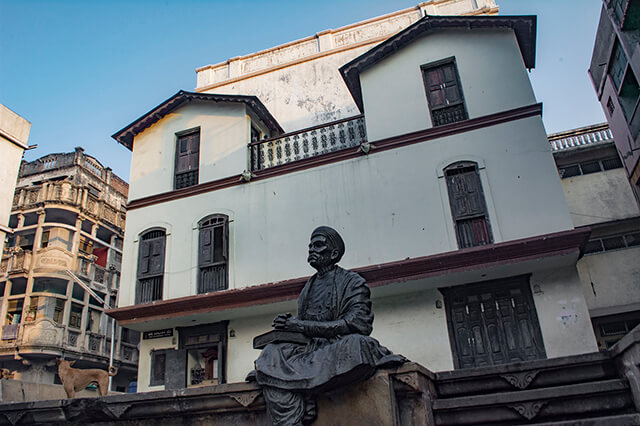
2. Take the AMC Heritage Walk
The Heritage Walk organized by the Ahmedabad Municipal Corporation is hands-down the best way to decode the old city.
When: 8:00 AM daily. (Don’t pre-book, just show up).
Where: Starts at Swaminarayan Temple, ends at Jama Masjid.
Why it’s worth it: Early mornings in old Ahmedabad are beautifully silent. We even walked into a few private courtyard homes, and the owners just smiled and continued their morning tea. You won’t get this level of hospitality in many modern cities.
3. Experience the Sabarmati Ashram
You can’t visit Ahmedabad without stepping into the life of Mahatma Gandhi. Sabarmati Ashram sits quietly on the banks of the Sabarmati River. It’s remarkably well-preserved. Spend a couple of hours here, read the letters on display, and then cross over to the modern Sabarmati Riverfront for a quiet evening walk.
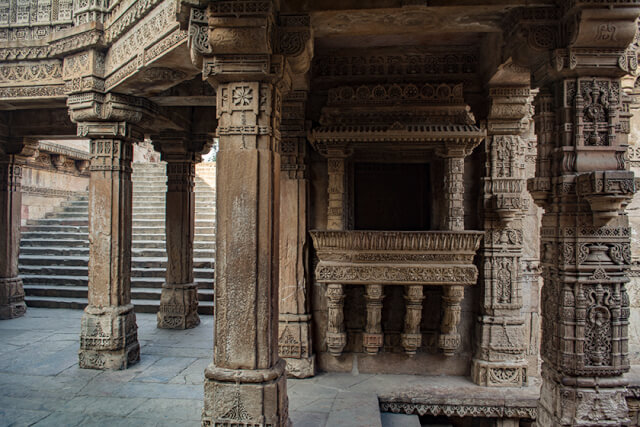
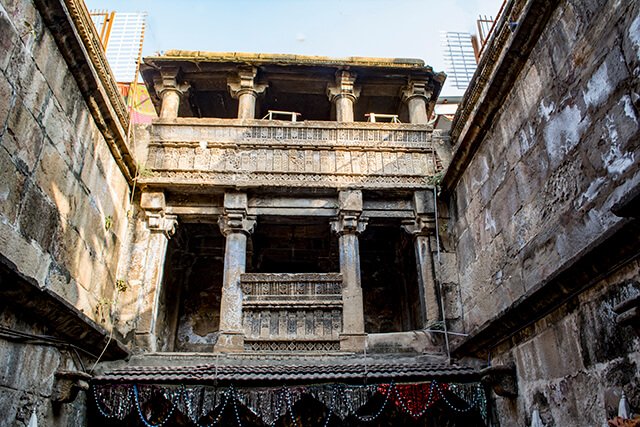
4. Marvel at the Stepwells (Vavs)
Stepwells in Gujarat were ancient subterranean water-cooling systems, and they double as architectural masterpieces.
Adalaj Stepwell: The most famous, with five stories of intricate Indo-Islamic carvings. It gets crowded, so go early.
Dada Harir Vav: Built in the 15th century, this one is much quieter, slightly less maintained, but incredibly atmospheric for photography.
Where to Eat: The Late-Night Chaos of Manek Chowk
Ahmedabad’s food scene is deeply rooted in its culture. If you are a street food enthusiast, you cannot skip Manek Chowk.
By day, this square is a bustling jewelry market. But as the shutters close at night, it transforms into a massive, chaotic open-air food court.
What to try: The Ghughra sandwiches, Dabeli, and the obscenely buttery Pav Bhaji.
A reality check: It is loud, crowded, and not for those who want a quiet, sanitized dining experience. But the flavors are phenomenal.
Where to Stay in Ahmedabad
Ahmedabad has plenty of generic 3-star business hotels, but why sleep in a concrete box when you can stay in a piece of history?
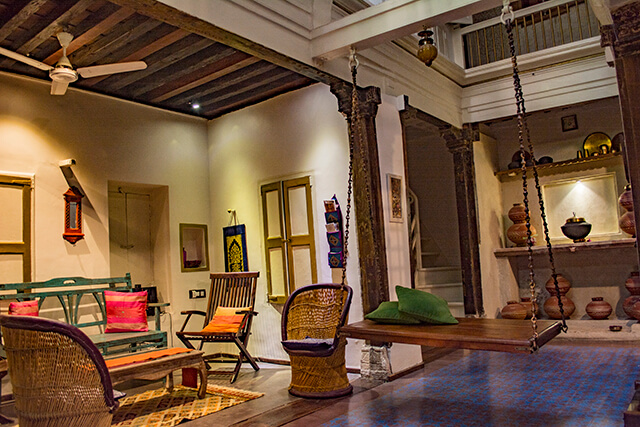
Within the 300+ pols of old Ahmedabad, there are roughly 2,000 traditional Gujarati Havelis. Many have been restored into boutique tourist homes. Running a boutique resort myself in Manali, I know firsthand how difficult it is to balance modern comfort with heritage preservation, and these Havelis do it brilliantly.
I stayed at the French Haveli in Dhal ni Pol. It features a central courtyard, wooden swings, and impossibly steep staircases. It puts you at a walking distance from Manek Chowk, the Muslim tombs of Ahmedabad’s first King and Queen, and Sidi Saiyyed Mosque. It might stretch a typical backpacker’s budget, but even a one-night stay is worth the investment.
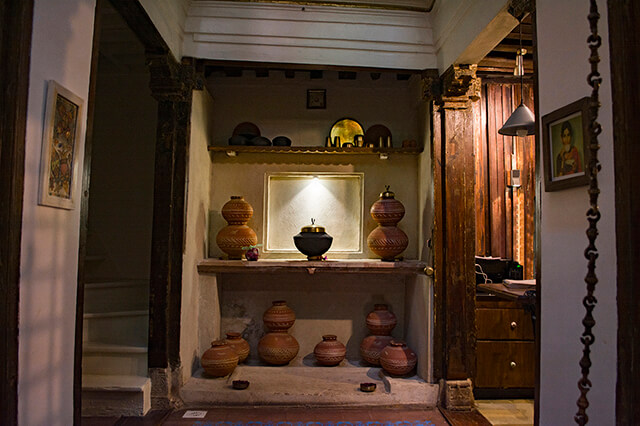
Pols, or the neighbourhoods, is an exclusivity of the old town of Ahmedabad. Exploring the pols during your time in Ahmedabad is a no-miss.
Each pol is a housing cluster which comprises many families of a particular group linked by caste, or religion. It is believed that they were originally made as a protection measure during the communal riots in the city. Today, they act as the city’s tourism highlight, laden with stories that go down generations.
Many pols are now part of the cottage industry, thereby creating a lively atmosphere inside them. The heritage of these pols has helped Ahmedabad gain a place in UNESCO’s world heritage list. No wonder, they are an interesting evolution in the urban lifestyle and the testimonies of Ahmedabad’s rich history and heritage.
To best experience, the pols, just walk down a few narrowest streets in the town (the narrower the better) and watch happy locals busy in their daily life and soak up the amazing architecture — representing Mughal, British, Maratha and Persian colonies.
In my experience, these pols will give you a better travel experience in Gujarat than the popular Rann Utsav. Here, you will see life in its more real and conscious form. So yea, if anything, I suggest you visit pols in this Ahmedabad travel guide.
Getting Around & Practical Tips
Transport: Uber and Ola work perfectly fine for long distances (like going to the Auto World Vintage Car Museum or Adalaj Stepwell). Inside the old city, auto-rickshaws and your own two feet are your best friends.
Dry State: Remember, Gujarat is a dry state. Alcohol is only available to tourists who apply for an e-permit online and purchase it from authorized hotel shops.
Language: Hindi is widely understood, though starting a conversation with a quick “Kem Cho” (How are you?) in Gujarati will instantly earn you a local’s smile.
Ahmedabad isn’t a place you visit just to tick boxes off a list. It’s a city you experience by sitting on a heritage porch, flying a kite with a stranger, and eating street food at midnight.
Do Not Miss The Ahmedabad Heritage Walk
The Heritage Walk organised by Ahmedabad’s Municipal Corporation is the best way to understand the city’s rich history. It starts at 8 am daily at the Swaminarayan Temple and ends in nearly two and a half hours at Jama Masjid. No pre-booking is required. Just show up at the temple a few minutes before 8 am and you can buy your pass on the spot.
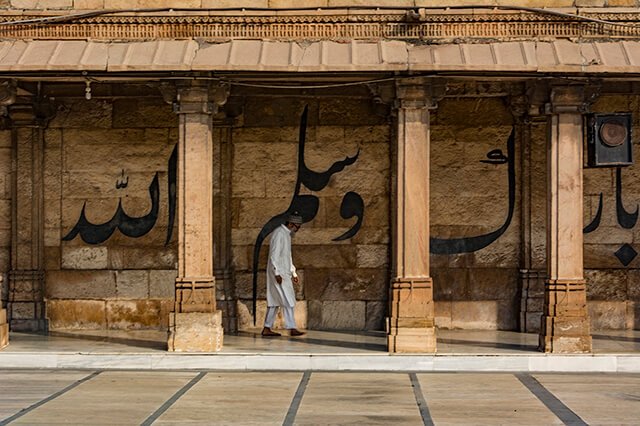
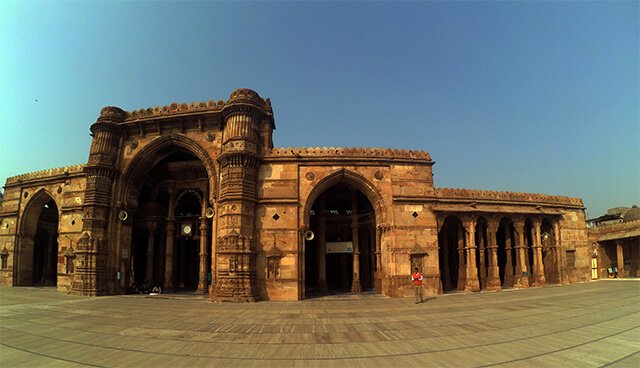
I would have walked through the same parts of the city, as I did during the heritage walk, and not carried a mindset to remark, as I rather did after the walk. After meandering through the many historic alleys and a few pol communities, I could see the old town of Ahmedabad much more clearly.
The amazing part was that I could amble in the old city without ploughing my way through a milling crowd. Early mornings are wonderful, silent and uncrowded to walk around old Ahmedabad.
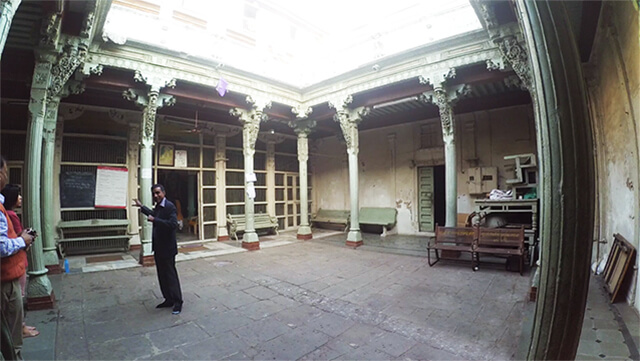
We even entered a couple of houses to see the architectural heritage, amidst the owners of houses busy with their routines, and not the slightest sign of antipathy on their faces for us intruding on their privacy. Perhaps that is the essence of Indian culture. Guests are always welcome.
Use this website to book an Ahmedabad heritage walk tour. You can also do so by visiting the Heritage Walk office at Swaminarayan Temple if you don’t want to book online.
That’s all in this Ahmedabad Travel Guide. If you have more questions, please feel free to write me a comment below.
Also, read this Gujarat travel guide for more tips on what to see and do in Gujarat, or this Kutch travel guide, if you are only travelling to the Kutch region.
If you have a question or would like to connect, please find me on Instagram. You can also follow my YouTube channel for video updates.