When most people think of Manali, the same names pop up — Solang Valley, Rohtang Pass, Old Manali cafés, and crowded viewpoints. I’ve lived in Manali long enough to know that the real Manali begins where Google Maps popularity ends.
I hope you know how I found a traditional Himachali house perched on hilltop in Naggar and stayed there alone for three-months. And later ran a guesthouse too with similar setting.
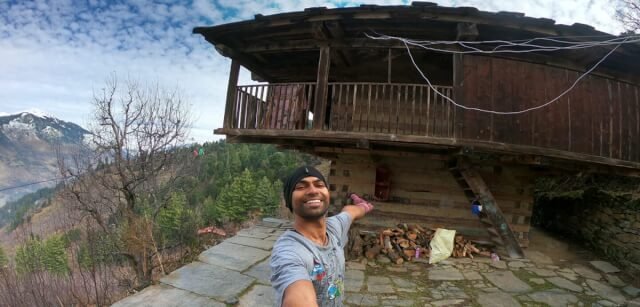
I mean how many people you know who have done something similar? So yea, I, Footloose Dev, the encyclopaedia of Manali, brings to you another offbeat Gem near Manali that most people do not visit and end up seeing the same crowded places. And this place is called Dobhi (also spelled as Dhobi).
Visiting Manali for Adventure Activities? Stay in Dobhi
This sleepy village near Manali has completely changed my perception of adventure travel in Himachal. Quiet, raw, adrenaline-filled, and refreshingly untouched — Dobhi is one of those rare places that still feels like a discovery.
If you’re searching for an offbeat place near Manali that offers real adventure, riverside camping, paragliding, and hidden waterfalls without tourist chaos, this detailed guide will help you plan the perfect trip. Stay in Dobhi.
Two more offbeat destinations (with not as many adventure activities to do though) that I can recommend you visit are: Hallan Valley and Kharma Valley.
My First Visit To Dobhi
I first visited Dobhi while staying in Manali when our hotel owner took me and my family for a day-out. He took us for a visit to his friends house where we enjoyed local lunch of Saag and Makki ki roti. We also explored the Devta Nivas in their house (typically the top-floor of higher caste people in the village).
Check out the video below I posted on my Youtube Channel:
Honestly, Dobhi doesn’t feel like a big place to visit that can interest people to stay there. And I was no different. During my first visit I didn’t expect much. But that changed after a few visits and as I realised what all this place can offer.
Here Paragliders fly right above your head. The sound of the river fills the valley. No honking cars. No souvenir shops. Just raw Himachali terrain.
And that’s when you realise — this is the kind of place adventure travellers look for but rarely find.
Where Is Dobhi Located?
Dobhi is a small village located on the Manali–Naggar road, roughly:
- 20 km from Manali
- 12 km from Naggar
- Situated along the Beas River
Despite being so close to Manali, Dobhi remains surprisingly underexplored. Most travellers simply pass through it without realising that this stretch hides some of the best adventure experiences near Manali.
They either do not come here at all or visit for only adventure activities like paragliding and river-rafting and then stay somewhere in Manali or Old Manali.
But the thing is, if you want to stay at someplace offbeat away from the usual crowd, stay here. The moment you step off the bus at Kali Mata Mandir, Dobhi, the vibe changes. The air feels calmer, the river louder, and the mountains closer.
What makes Dobhi special isn’t one attraction — it’s the combination of adventure, isolation, and accessibility.
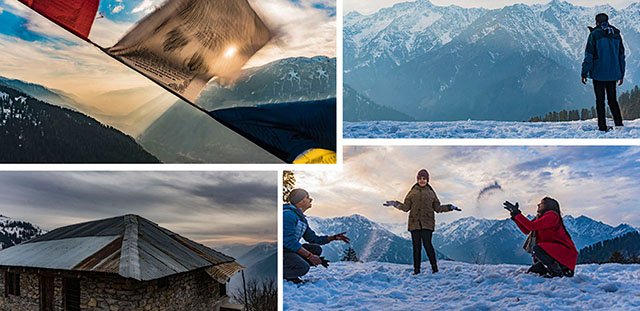
Here are 5 reasons why Dobhi stands out:
- No traffic jams or tourist rush
- Direct access to Beas River adventure zones
- Best paragliding sites near Manali (flight from here is longer in duration than compared to Solang Valley)
- Riverside camping with uninterrupted mountain views
- Hidden waterfalls and unexplored trails
Dobhi doesn’t try to impress you. It lets the landscape and experiences speak for themselves.
What To See & Do In Dobhi
For adventure lovers this place is heaven, and because it’s not crowded, doing adventure activities here is even more fun. Other than camping, paragliding and river-rafting that I will talk about more in detail below, you can do trekking, do a hot-air balloon ride, play paint-ball and do zip-lining.
There are many hidden-waterfalls in the area that you can explore. Also, visit Fojal Valley located very close to Dobhi for another offbeat location.
Now let’s discuss the three major adventure activities in Dobhi:
Paragliding
Why Dobhi Paragliding Is Special?
Excellent thermals due to valley orientation
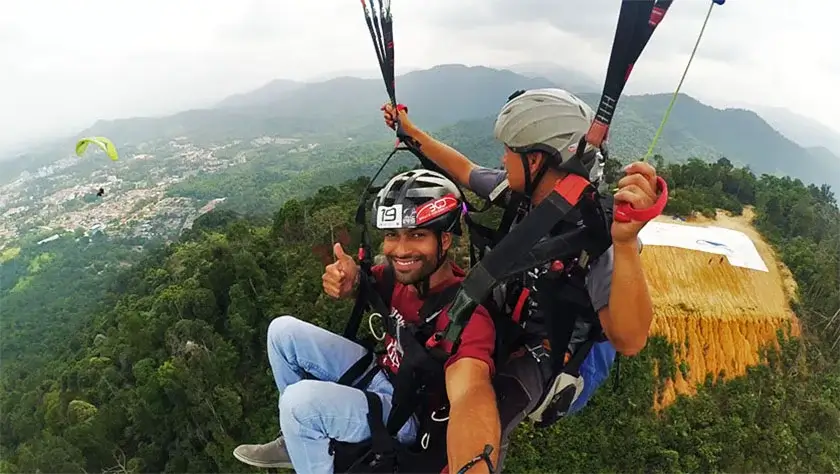
Long flying duration compared to Solang. Where in Solang the longer flight costing around 3500 Rupees is less than 3 minutes, here you get it for nearly 5 minutes. Sometimes even longer if wind allows and if you tell your pilot to go slower and not do somersault for extra trill.
Here you find less crowded launch sites. Additionally, the views are better as you get Valley view here where in Solang you mostly get mountain views.
Personally speaking, unlike Solang Valley, where paragliding feels rushed and commercial, Dobhi offers a calmer, more immersive flying experience.
- Cost: Approx. INR 3,800
- Best Time: March–June & September–November
- Who Can Fly: Beginners & experienced flyers
Riverside Camping: Where To Stay In Dobhi
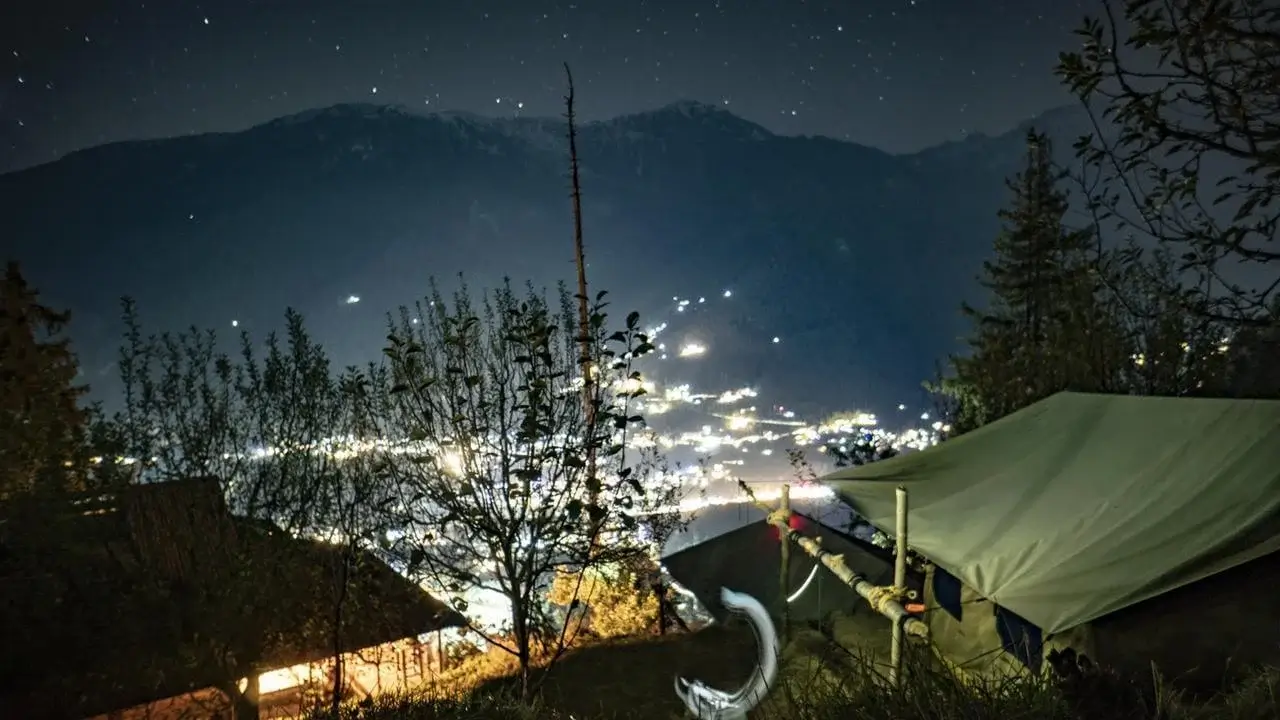
One of the biggest reasons Dobhi works so well as an offbeat adventure destination near Manali is the riverside camping experience. Unlike commercial camps clustered in Solang or Old Manali, camping in Dobhi feels raw and immersive.
Most camps here are set right along the banks of the Beas River, which means you fall asleep to the sound of flowing water and wake up to mist rising from the valley. The nights are cold, quiet, and surprisingly peaceful — no traffic noise, no party crowds, just the river and the mountains.
Check Camping Kona that is one of the popular camping accommodations that I can recommend. They charge around 3500 Rupees per night including two meals.
Located right beside the Beas River with comfortable luxury tents with attached washrooms, this place offers easy access to paragliding take-off points.
Riverside camping in Dobhi is ideal for travellers who want to stay close to nature without completely roughing it. Evenings are usually spent around a bonfire, sharing travel stories, listening to music, or simply staring at the stars — something that feels rare in more commercial parts of Manali.
River Rafting
While river rafting near Manali is commonly associated with Kullu or Pirdi, Dobhi offers a less crowded and more scenic rafting experience on the Beas River.
The stretch near Dobhi is particularly suitable for:
- First-time rafters
- Adventure travellers looking for moderate rapids
- Groups wanting a balance of thrill and safety
Rafting here usually covers Grade I to Grade III rapids, making it exciting without being overwhelming. The real highlight, however, is the setting. You raft through forested stretches and open Kullu valley.
Lately Dobhi is getting commercialised for river-rafting experience. But still, the experience lasts around 30–45 minutes, depending on the water level and chosen stretch, and it’s worth trying.
- Cost: Approx. INR 1,000 – 1,200 per person
- Best Season: April to June (snowmelt season offers stronger rapids)
- Monsoon: Usually avoided due to safety concerns
Visiting Naggar: Adding Culture to Your Dobhi Adventure Trip
Dobhi’s biggest advantage is its proximity to Naggar, one of Himachal’s most culturally rich towns. Once the former capital of the Kullu kingdom, Naggar is layered with history, art, village life, and spiritual calm.
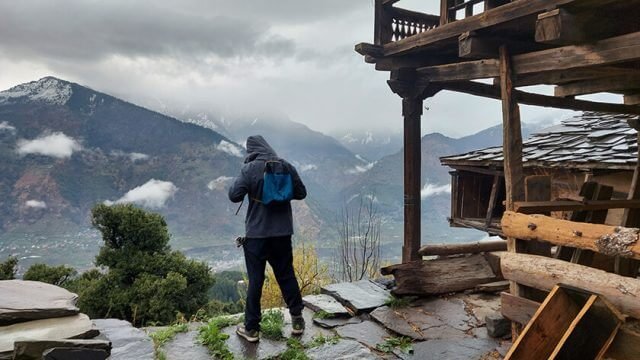
Stone houses with wooden balconies, apple orchards, narrow lanes, and locals going about their day give Naggar an authenticity that many places around Manali have lost. Early mornings and late afternoons are ideal for walks when the village is quiet and golden light hits the valley. If you enjoy photography, this is where Naggar truly shines — not at viewpoints, but in everyday life.
In Naggar, you find the most number of traditional Kathkuni style houses than anywhere else in Himachal Pradesh. I am sure if you will request politely, locals will be happy to show around their traditional Kathkuni house (also known as madhouses). If not, you can always visit the Naggar Castle that depicts Kathkuni Architecture in its true form.
Naggar Castle: Built around 1460 AD, Naggar Castle survived the devastating 1905 earthquake — a testament to traditional Kath-Kuni architecture.
Also visit the Art gallery of Nicholas Roerich for Panoramic views of Kullu Valley and an adjoining restaurant with valley-facing seating.
How to Travel to Dobhi
Its location on the Manali–Naggar road makes it accessible without sacrificing isolation.
Delhi to Dobhi
By Bus (Most Budget-Friendly & Convenient)
If you’re travelling from Delhi, taking an overnight bus (any bus going to Manali) is the easiest option. Ordinary HRTC Buses cost INR 800 – 1,000. Volvo / Semi-Sleeper Buses: INR 1,400 – 1,600. I suggest you take a Volvo or Semi-Sleeper for comfort. This way you can use the day you arrive exploring the town rather than sleeping in your hotel-room.
Buses leave from ISBT Kashmere Gate or Majnu Ka Tila and usually reach Manali early in the morning.
Important Tip: Ask the conductor to drop you at Kali Mata Mandir, Dobhi. Most travellers mistakenly get down at Manali and then backtrack.
Travel time: 12–14 hours, depending on traffic and weather.
Reaching Dobhi from Manali
Dobhi is located approximately 20 km from Manali.
You have three options:
1. Local Bus (Best for Backpackers)
- Frequent buses on the Manali–Naggar route
- Fare: INR 30 – 50
- Travel time: 45–60 minutes
2. Taxi
- Ideal for groups or if you’re carrying gear
- Fare: INR 1,200 – 1,800 (one way)
3. Self-Drive / Bike
- Smooth mountain road with scenic views
- Easily navigable even for first-time hill drivers
Best Time to Visit Dobhi
Choosing the right season is crucial because Dobhi is primarily an adventure destination. Weather directly impacts activities like paragliding, rafting, and trekking.
- For adventure & activities: March–June, September–October
- For peace & landscapes: November, early March
- For snow lovers: Late December–January (with limited activities)
Here’s a breakdown of the entire year with more details…
March to June: Best Time to Visit Dobhi for Adventure
- This is the ideal season if adventure is your priority.
- Clear skies for paragliding
- Snowmelt increases river flow for rafting
- Pleasant daytime temperatures (10°C – 25°C)
- Lush greenery and blooming valleys
- Most adventure activities operate at full capacity during these months. This is also the best time for first-time visitors.
May and June see slightly more tourists, but Dobhi still remains far less crowded than Manali or Solang.
July to August: Monsoon (Visit with Caution)
Dobhi receives moderate to heavy rainfall during monsoon.
Pros:
- Vibrant green landscapes
- Fewer tourists
- Misty mountain views
Cons:
- Paragliding often suspended
- River rafting limited or closed
- Risk of landslides on approach roads
This season is suitable only if you’re comfortable with unpredictable weather and flexible plans.
September to November: Best for Clear Views & Calm Travel
Post-monsoon is another excellent time to visit Dobhi.
- Crisp air and clear skies
- Stable weather for paragliding
- Golden autumn landscapes
- Fewer travellers than peak summer
- Temperatures range between 5°C – 20°C, making it perfect for camping and outdoor activities.
December to February: Winter in Dobhi
Winters in Dobhi are cold and quiet.
- Snowfall at higher elevations
- Limited adventure activities
- Temperatures can drop below zero at night
- This season is best for travellers who enjoy solitude, winter landscapes, and slow travel. It’s not ideal if paragliding or rafting is your main goal.
Final Thoughts: Dobhi Won’t Stay Hidden For Long
Dobhi is not loud. It doesn’t advertise itself. And that’s exactly why it works.
If you’re looking for an adventure-centric, offbeat destination near Manali that still feels untouched, Dobhi delivers in every sense — from paragliding in open skies to quiet nights by the river.
As someone who actively explores hidden corners of Himachal through my travel blog, I can confidently say: Dobhi won’t stay hidden for long — visit it while it still feels like a secret.