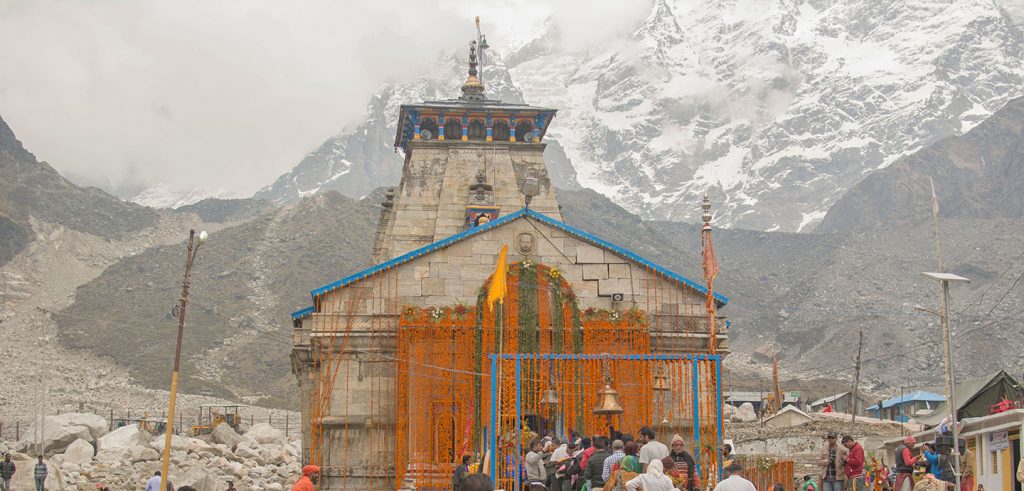
It is said in Hinduism that no act is more righteous or spiritually rewarding than taking your parents on a pilgrimage to the Char Dham — the four holy sites of Yamunotri, Gangotri, Kedarnath and Badrinath in the Indian Himalayas. Earlier this year, I lived that belief when I finally took my mother on the Char Dham Yatra, a journey of faith, perseverance, and unforgettable beauty.
This detailed travel guide is based on our firsthand experience — backpacking through the entire pilgrimage without booking standard Char Dham tour packages. We relied on rickety public buses, shared taxis and flexible planning to complete the entire route the way true pilgrims do.
In this blog, you’ll find:
- A complete Char Dham itinerary day-by-day — how to reach each dham, travel routes, distances and travel time.
- The best time to visit Char Dham (with seasonal advice) so you avoid monsoon disruptions or winter closures.
- Practical travel tips, transport options, accommodation costs, trekking details, and how to plan a self-guided Char Dham trip without a tour operator.
This is not a travel company itinerary — it’s a practical, updated Char Dham Yatra guide for self-planners, solo travellers, families and budget-conscious pilgrims.
My Char Dham Yatra Trip: A Self Planned Itinerary
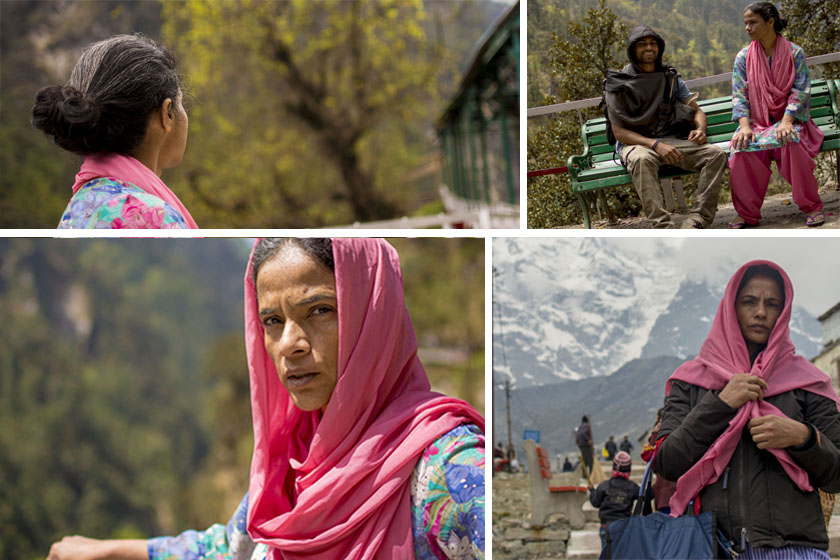
My mother had been requesting for a Char Dham Dharshan for a while. After denying her a Kamakhya temple trip the previous year, I had no excuse left. And truthfully, it felt like the right time — both as a son and as a traveller wanting to document a detailed, experience-based Char Dham travel guide.
We decided one thing clearly: We were not booking a Char Dham tour package.
No fixed buses. No rushed darshans. No fighting for front seats.
We would backpack the entire Char Dham Yatra on our own.
For nearly 10 days, we relied on public buses, shared taxis, flexible hotel bookings and spontaneous itinerary adjustments — while still respecting the traditional pilgrimage order: Yamunotri → Gangotri → Kedarnath → Badrinath.
So, again, if you’re planning a self-planned Char Dham Yatra, this guide will help you with:
- Complete Char Dham route details
- How to travel between the four dhams
- Gangotri to Gomukh trek distance
- Kedarnath trek medical rules
- Bus & taxi costs
- Accommodation options
- Best time to visit Char Dham
- Helicopter vs road comparison
This is not a travel company brochure. This is a ground-level, practical Char Dham Yatra guide.
Char Dham Yatra: The Correct Pattern

Not many people are privy to the fact that the Char Dham Yatra follows a pattern and end up visiting the four holy places the way they fancy. From what is believed, the pilgrims should first visit Yumnotri, then Yamunotri, then Kedarnath, and in the end, Badrinath.
Many people are unaware that the Char Dham Yatra follows a clockwise spiritual order: Yamunotri > Gangotri > Kedarnath > Badrinath
The temples remain open only between April/May and October/November, depending on the Hindu calendar. During winter, heavy snowfall shuts down access and the idols are shifted to winter seats.
Even if roads are open off-season, temple doors remain closed and public transport becomes scarce.
One can check the exact date of the opening of the Char Dham Yatra on the official Uttarakhand Tourism website.
Though people are allowed to visit the four sites throughout the year (if the roads are not blocked already due to heavy snowfall in winter) the temples remain locked. It is moreover quite impossible to find public bus connections once the Yatra has been officially announced as discontinued for the season!
A self-planned trip may take a few days extra, as you may end up spending a little more time finding accommodation or waiting for public transport, but rest assured, there’s going to be much more freedom and peace of mind throughout the journey. The entire trip may also just feel a lot cheaper than booking a per-pax, all paid for the tour — particularly if you’re two or more people and hence sharing hotel rooms.
There will be enough regular buses and shared taxis moving along the route between the official opening time of the yatra. When the yatra is officially discontinued, finding transport can be a problem. So plan accordingly.
7-Day Char Dham Itinerary & Routemap
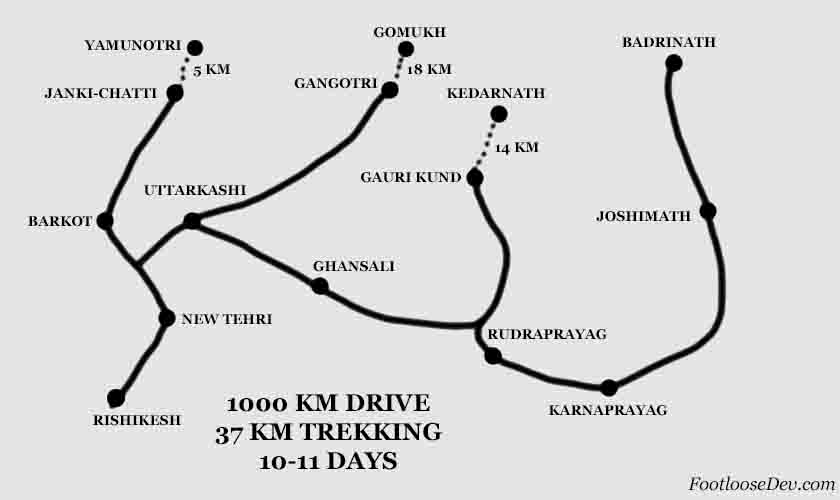
Despite the four sites of Yamunotri, Gangotri, Kedarnath and Badrinath being located pretty close to each other, the higher mountain regions here make it pretty impossible to have any direct road connection between them — forcing travellers to take longer detours and thus travelling longer distances. Consider a full-day drive (7-14 hours) from one destination to the other.
Day 1: Rishikesh to Yamunotri
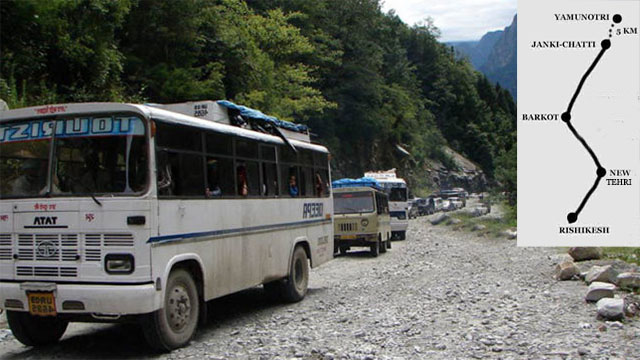
It is not possible to go from Rishikesh to Yamunotri in a day, as you need to trek (from Janki Chatti) to get to Yamunotri. So the first day includes getting to the base camp of the Yamunotri trek.
Morning buses from Rishikesh (around 4 AM) take 10–11 hours to reach Janki Chatti. From Janki Chatti to Yamunotri is a 4-5 hour trek.
- Bus fare: ₹500–800
- Shared taxi: ₹200–300 extra
- Altitude: ~2,800 meters
Stay overnight at Janki Chatti. Do not attempt the trek the same day.
There are enough budget hotels to stay at Janki Chatti. A few guest houses can also be found at Yamunotri, but in peak season, it may be possible that they’re all fully booked.
Also, read this Rishikesh travel blog guide if you are planning to stay there or explore it in a day.
Day 2: Yamunotri Trek
Yamunotri is the source of the river Yamuna, which, according to Hindu belief, is considered pure and bathing in its waters is believed to absolve people of their sins.
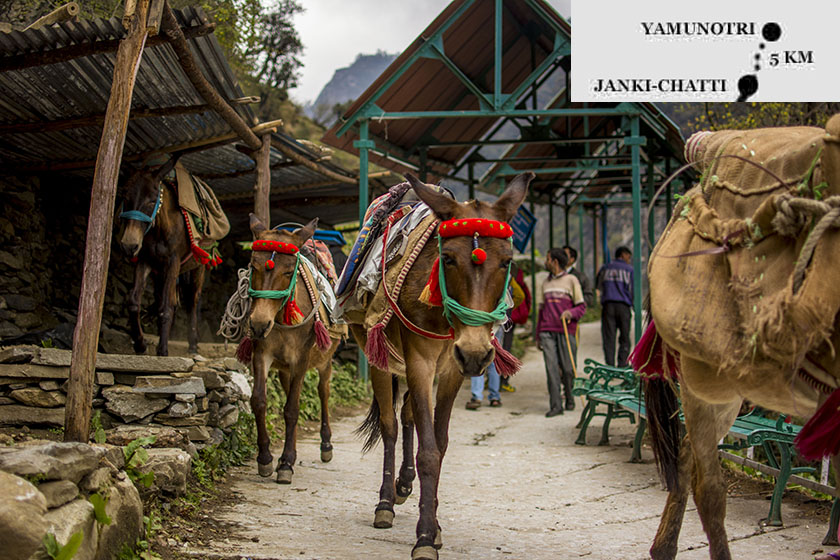
The Janki Chatti to Yamunotri trek is a well-marked concrete path. It’s mostly an uphill climb but ponies and porters are available.
Depending on how fast you walk and how busy the temple at Yamunotri is, it can take 4 to 5 hours to complete the Yamunotri trek. You will be treated to a hot spring at Yamunotri.
Return to Janki Chatti and rest on Day 2 of your Char Dham Yatra.
Day 3: Yamunotri to Gangotri
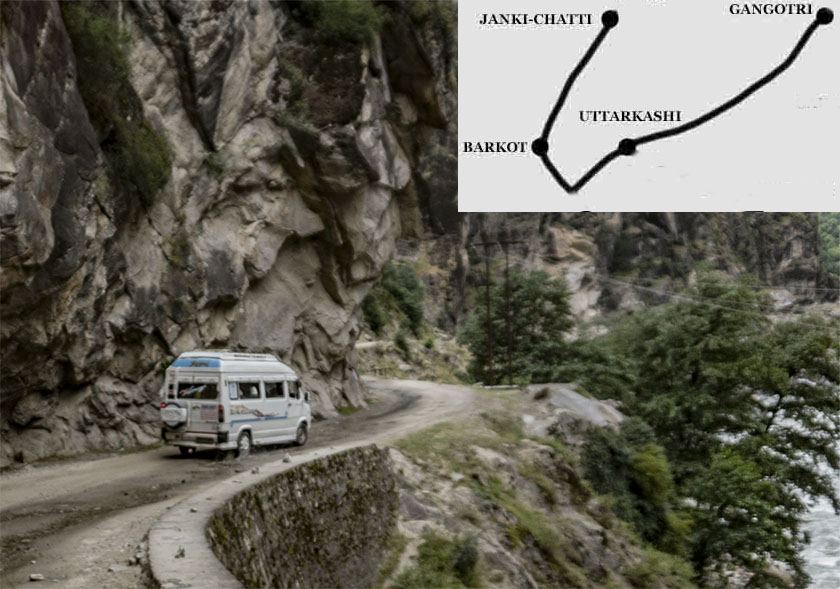
If you’re Google searching for Yamunotri to Gangotri distance, you are doing it wrong, because it should rather be Janki Chatti to Gangotri.
Reaching Gangotri can feel like another long journey, though not as long as coming from Rishikesh. It’s a 7-8 hour journey.
Now, the Gangotri temple is located in the town of Gangotri itself, confusing many about whether or not to trek to Gomukh (the source of river Ganga) and pay tribute there. You don’t necessarily need to visit Gomukh if you don’t want to. It’s an extended part of the journey. You can visit the Gangotri temple and leave for Kedarnath if you wish to. The Gangotri to Gomukh trek takes at least two days and requires completing an 18+18 km trail.
If you wish to skip the trek, skip Day 4 & Day 5 below.
Day 4: Gangotri to Bhojbasa
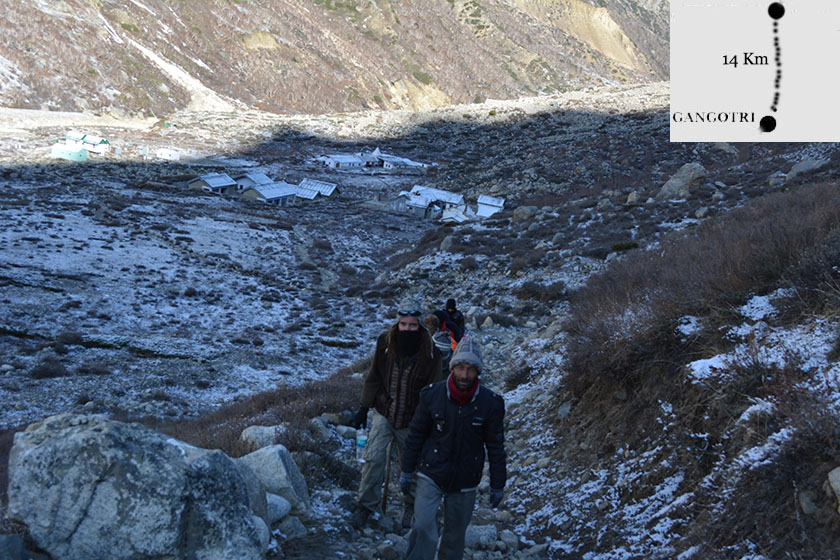
The Gangotri to Gomukh trek takes two days, with the first destination being a place called Bhojbasa. The trek to Bhojbasa — 14 km from Gangotri, starts at the front courtyard of the Gangotri temple — following a steep climb of around 100 steps which leaves you pretty much exhausted before you even start. But once you’re done with it, there’s only a gentle uphill climb throughout.
It took us around 8 hours to complete the trek, and reach Bhojbasa. Regular ongoing pilgrims kept us on track (as we got confused and got off-the track a few times). Having said that, if you’re visiting Char Dham in offseason when the chances of finding other pilgrims are less, it’s advised to hire a guide.
Bhojbasa has a GMVN government guesthouse or a much cheaper Lal Baba Ashram where you can stay for 500 Rupees a night, including food and stay.
Day 5: Bhojbasa to Gomukh, and back to Gangotri
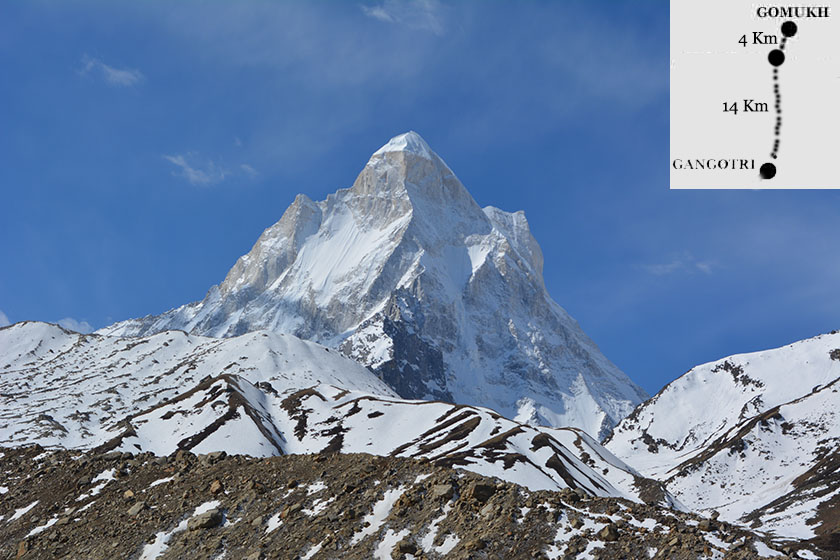
Since Bhojbasa is located 4 km from Gomukh, continue your journey early the next day and reach Gomukh (the source of the river Ganga) in an hour and a half. This completes your pilgrim to Gangotri.
Spend some time at Gomukh and walk back to Bhojbasa. Have a cup of tea at Bhojbasa if you fancy or continue your walk back to Gangotri. Since Bhojbasa to Gangotri is pretty much a gentle downhill walk, there should be no problem in completing it in under 5 hours. Find a place in Gangotri and stay for the night.
Day 6: Gangotri to Kedarnath
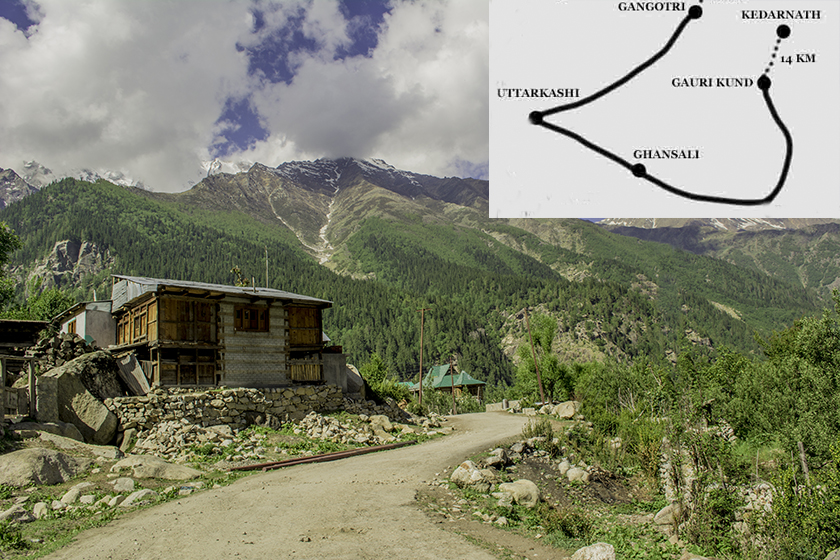
Just like I mentioned above, if you’re searching for Gangotri to Kedarnath, you’re doing the wrong search. Rather, search for Gangotri to Guri Kund. The journey to your Kedarnath tour starts from Gauri Kund.
Now, Gangotri to Gauri Kund is a long journey perhaps the longest of your entire Char Dham trip — a whopping 310 km and can take 12 hours to complete. Buses leave between 4 am to 7 am after which there are no direct buses, and you may have to break the journey (Gangotri to Uttarkashi to Gauri Kund).
Gauri Kund is where the road concludes itself. From here, you need to trek to Kedarnath. The trek is very similar to the Valley of Flowers trek if you have done it or heard of it.
For the Kedarnath yatra, you need to obtain a medical fitness certificate. This certificate can be obtained from the medical centres at Sonprayag. They check your blood pressure and your medical history. If you can’t prove yourself fit to walk, you won’t be allowed to do Kedarnath by trek. In this case, you will have to go to Kedarnath by helicopter.
Your bus will drop you at Sonprayag, from where you’ll get the medical certificate and take a shared taxi to Gauri Kund (a 10-minute journey).
Day 7: Gaurikund To Rambara
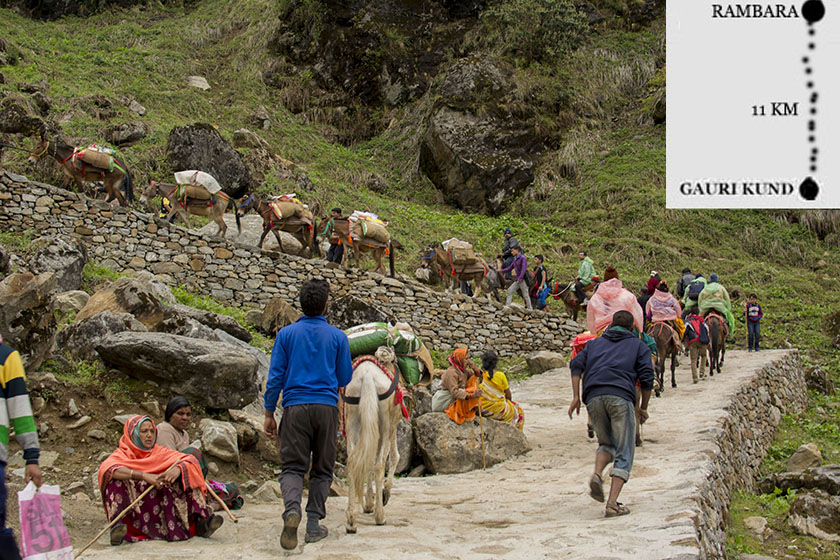
After the June’13 Kedarnath Floods, people think that the trekking route from Gauri Kund to the Kedarnath route is very risky and unsafe. But this is not true. The trek has become safer now, perhaps as safe as the trek to Vaishno Devi — with around 8 ft to 10 ft wide trail and a temporary iron railing on the edges.
Some people complete the Gauri Kund to Kedarnath trek and return in one day (especially if they hire a porter or a pony). But if you don’t mind sparing an extra day, two days make for an easy and enjoyable walk to Kedarnath. Located around 11 km from Gauri Kund, Rambara has a GMVN tent accommodation, with fresh food and a hot shower.
Day 8: Rambara to Kedarnath, and back to Gauri Kund
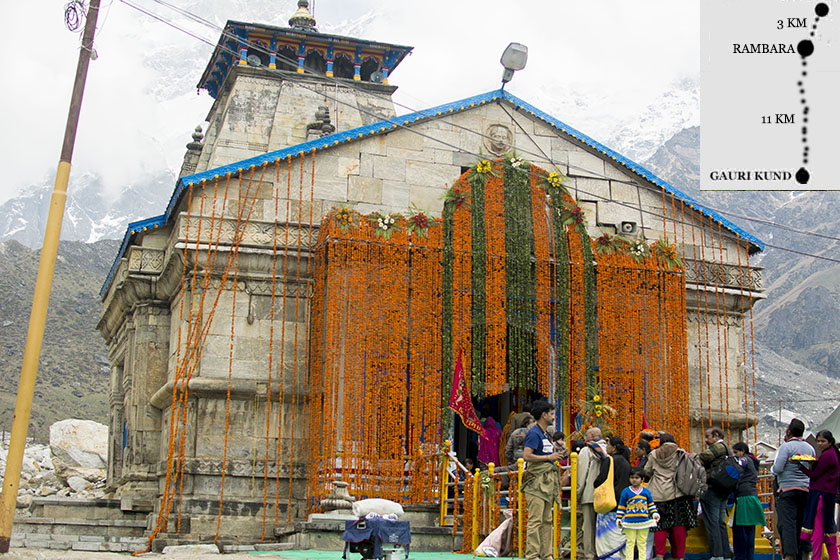
From Rambara, the Kedarnath temple is only a 3 km or an hour’s walk away. As you reach Kedarnath, the first thing you notice is the big commercial helipad. Next, to the helipad, there are camps and cottages made by NIM for the overnight stay of tourists, but since they go full during the season time, it’s always a good idea to stay at Rambara, unless you have a booking.
It may moreover take up to two or three hours to get into the temple at Kedarnath, so start early.
Once done, walk back to Gauri Kund and stay there for the night. If you’ve time, you can also consider taking the shared taxi to Sonprayag (the town where you got off earlier to obtain the medical certificate) and stay in Sonprayag. This may make it easier for you to catch the morning bus to Badrinath the next day.
Day 9: Gaurikund (or Kedarnath) to Badrinath
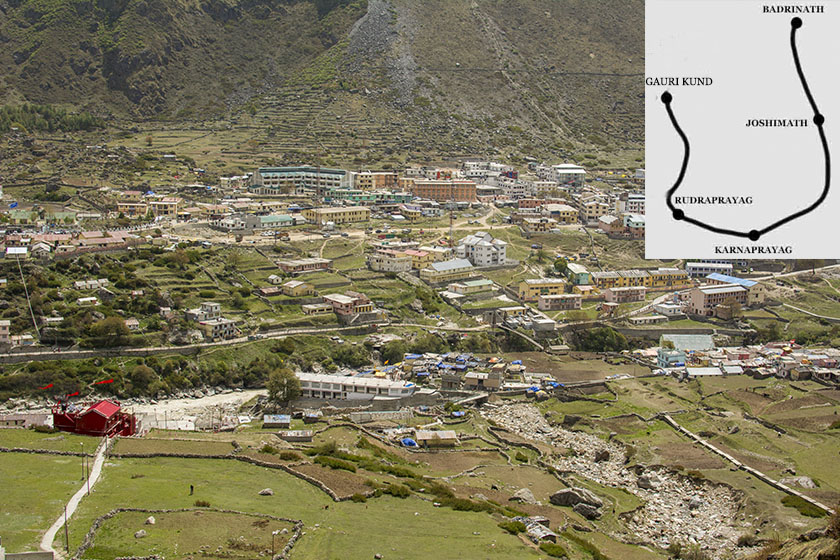
Gauri Kund to Badrinath is a 300km journey and can take 10-12 hours to reach. The temple of Badrinath is located right in Badrinath village where buses drop you. No need to trek.
This concludes your Char Dham Yatra on Day 9.
If you’re planning to leave for Rishikesh and take the early morning bus, visit the temple at night and book a bus ticket for the next day. Buses leave from Badrinath to Rishikesh as early as 4 am.
If you do not want to do a self-planned trip, there are many companies organising Char Dham Tours these days. Eg Travel Vaidya is a Dehradun-based travel company specialising in Char Dham tours by helicopter and by road. They have been conducting Char Dham tours since 10+ years. There are many other companies who operate these tours.
Useful Tips For Char Dham Yatra
- Consider paying 500-800 Rupees per person for every bus journey. A shared taxi, which is quicker, may charge 200-300 Rs extra than a bus.
- You can find a twin-sharing room for under 1000 Rupees at most places. At most places you can slo find GMVN tent accommodation that offer 6-8 bed mixed-dormitory style tents.
- Make sure to carry at least one photo ID card with you.
- Avoid visiting Char Dham between May and June because of the peak tourist season.
Helicopter vs Road: Which Is Better?
Helicopter Char Dham Yatra
Pros:
- Time saving
- Suitable for elderly pilgrims
- Comfortable
Cons:
- Expensive
- Weather dependent
- Less immersive experience
Road Char Dham Yatra
Pros:
- Spiritual depth
- Budget friendly
- Scenic Himalayan experience
Cons:
- Physically demanding
- Time consuming
- For younger or fit travellers, road travel feels more fulfilling.
Char Dham Yatra Cost Breakdown
Approximate 9–10 day budget:
Transport: ₹5,000–7,000
Stay: ₹5,000–8,000
Food: ₹3,000–4,000
Miscellaneous: ₹2,000
Total: ₹15,000–20,000 per person
Helicopter packages cost significantly more.
How Much Accommodation Costs?
Options include:
Budget lodges (₹500–1000 twin sharing)
GMVN guesthouses
Dharamshalas
Tent camps near Kedarnath
Remember that Peak season rates may double during May to June. Advance booking is highly advised for this period. If you can, I recommend you avoid this time. Starting July, until the temples are closed (usually in October) you can find fewer crowd making it much easier to travel.
Char Dham Yatra FAQs
How many days are required for Char Dham Yatra?
A minimum of 9–10 days for a self-planned road trip. Package tours, however, usually take around 6 days to complete the entire itinerary.
Is medical certificate mandatory for Kedarnath?
Yes, a health check is required at Sonprayag before trekking. Other than Kedarnath, no other site requires a medical certificate.
What is the best month to visit Char Dham?
September and early October offer fewer crowds and safer road conditions. Other than that, July and August are also good if it’s not raining.
Can Char Dham be done without a tour package?
Yes. With public buses and shared taxis available during season, a self-planned trip is absolutely possible. I have shared a detailed itinerary above where I planned a backpacking trip to all 4-sites with my parents.
If you have more tips to add to this Char Dham Yatra blog or travel guide, please leave a comment below.
If you have a question or would like to connect, please find me on Instagram. You can also follow my YouTube channel for video updates.