Planning a trip to Chitkul? This detailed travel guide covers everything—from the best time to visit and road conditions to hotels, weather, itineraries, photography spots, travel costs, and practical tips based on first-hand experience.
After a Busy Season, It Was Time to Explore More of The Mountains
After a busy season at our Homestay, hosting beautiful guests, it was finally time to wrap things up and hit the road again. The destination was an easy choice—Kinnaur, and more specifically, the beautiful village of Chitkul, in Sangla Valley.
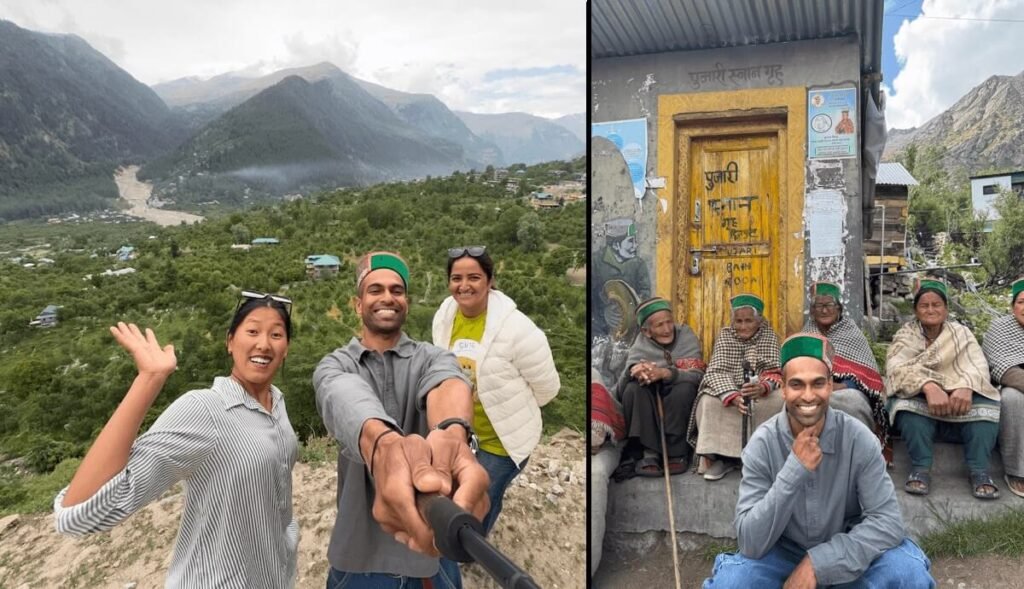
If you don’t already know, I and my wife run a peaceful mountain stay about two hours beyond Shimla, near Narkanda, right on the route from Delhi to Chitkul. If you’re driving from Delhi or Chandigarh, reaching Chitkul in one day can be tiring, and Shimla often feels crowded. Our place makes for a perfect overnight stop to relax before continuing your journey into Kinnaur.
If that sounds like something you’d enjoy, do check out our Instagram page: Footloose Camps.
Now, coming back to Chitkul…
There are mountain villages you visit for a few photographs, and then there are places that quietly stay with you long after you’ve returned home. Chitkul belongs to the second category.
Perched high above the Baspa River in Himachal Pradesh’s Kinnaur district, Chitkul is popularly known as India’s last inhabited village before the Indo-Tibetan border. While that title attracts most visitors, it is hardly the reason people fall in love with the village.
Come here, and you’ll find centuries-old wooden homes standing beside apple orchards, prayer flags fluttering in the cold mountain wind, crystal-clear glacial water rushing through the valley, and locals who continue to preserve traditions that have survived for generations.
Unlike destinations that demand a packed itinerary, Chitkul rewards travellers who slow down. Sit beside the Baspa River with a cup of tea, wander through narrow village lanes without checking Google Maps every few minutes, watch clouds drift across snow-covered peaks, or simply spend an afternoon listening to the sound of the river. In Chitkul, doing very little often becomes the highlight of the trip.
I’ve visited Kinnaur multiple times over the years, and every journey has reminded me why this region remains one of Himachal Pradesh’s most fascinating destinations. This guide combines those experiences with practical travel information to help you plan your own visit.
Whether you’re travelling with family, driving your own car, riding a motorcycle, backpacking through Himachal, or simply looking for your next Himalayan road trip, you’ll find every important detail here.
Watch My Chitkul Travel Vlog
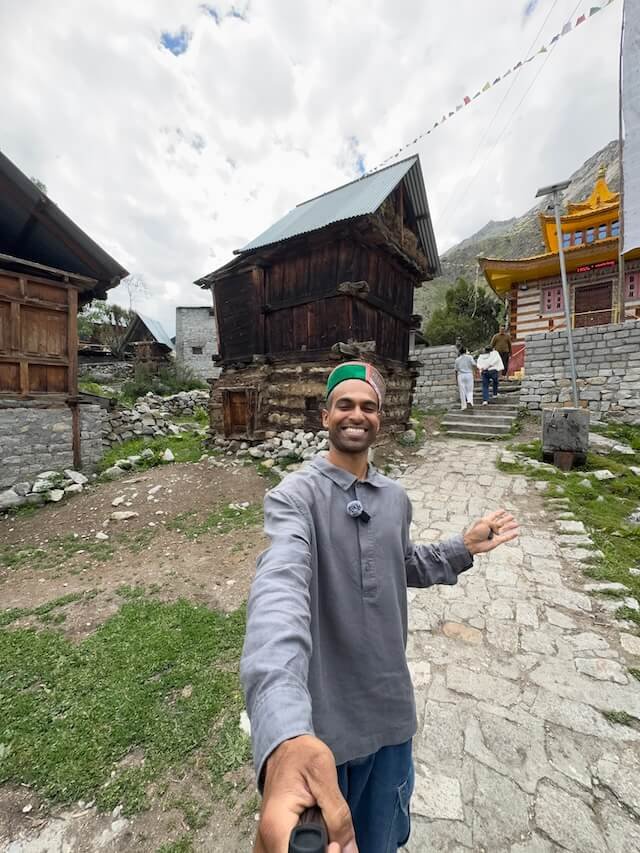
If you’d like to see what Chitkul actually looks like before planning your trip, I’ve documented the complete journey—including the drive through Kinnaur, the ancient Mathi Temple, village walks, the Baspa River, local stories, and some lesser-known experiences—on my YouTube channel (or in the video shared above).
Watching the vlog first will give you a much better feel for the destination, while this guide answers all the practical questions that will help you plan your visit.
Also Read: This Chitkul and Sangla Valley Photoblog
An Introduction To Chitkul
Perched at an altitude of around 3,450 metres in Himachal Pradesh’s Kinnaur district, Chitkul is often introduced as the last inhabited village near the Indo-Tibetan border. While that’s technically true, it barely scratches the surface of what makes this little Himalayan settlement so memorable.
For me, Chitkul isn’t just another mountain destination. It is one of those villages where time seems to move differently. Wooden homes stand beside centuries-old temples, the Baspa River flows with remarkable clarity, prayer flags flutter against snow-covered peaks, and every walk through the village feels like stepping into a slower, simpler way of life.
Is Chitkul worth visiting?
Yes. Chitkul is one of the most rewarding destinations in Himachal Pradesh for travellers who enjoy mountain scenery, traditional Himalayan villages, road trips, photography, and peaceful surroundings. Unlike more commercial hill stations, Chitkul has managed to retain much of its old-world charm despite becoming increasingly popular.
Ideal Trip Duration For Chitkul
Plan at least two nights in the Sangla Valley. Spend one night in Sangla or Rakcham and another in Chitkul. This allows you to explore the valley without rushing and gives you the chance to experience Chitkul early in the morning, before most day visitors arrive.
Best For
- Road trips
- Couples
- Photographers
- Nature lovers
- Families
- Motorcycle tours
- Solo travellers
- Content creators
Not Ideal For
Travellers looking for luxury shopping, nightlife, cafés on every corner, or a fast-paced itinerary.
Where Is Chitkul?
Chitkul lies in the Baspa Valley of Kinnaur district in northeastern Himachal Pradesh, close to the Indo-Tibetan border. It sits at the end of the Sangla Valley road, meaning every vehicle entering Chitkul must first pass through Sangla and Rakcham.
Although many people refer to it as “the last village of India,” the more accurate description is the last inhabited village accessible to civilians before the Indo-Tibetan border. Beyond Chitkul lies Nagasti, an Indo-Tibetan Border Police (ITBP) checkpoint, after which civilian movement is restricted.
One of the reasons the drive feels so special is because the landscape changes dramatically as you climb higher into the valley. Dense pine forests gradually give way to open alpine meadows, towering cliffs, wooden villages, and finally the wide glacial valley surrounding Chitkul.
Why Is Chitkul Famous?
Most travellers first hear about Chitkul because of its location near the Indo-Tibetan border, but there are several reasons why it has become one of Himachal Pradesh’s most iconic mountain destinations.
1. India’s Last Inhabited Village
The village is widely known as the last inhabited settlement before the Indo-Tibetan border. This alone attracts thousands of visitors every year.
2. Baspa Valley
Many experienced travellers believe Baspa Valley is among the most beautiful valleys in Himachal Pradesh. The emerald-green Baspa River, surrounded by towering mountains and traditional villages, creates scenery that changes dramatically with every season.
3. Traditional Kinnauri Culture
Unlike many hill stations that have modernised rapidly, Chitkul still preserves much of its traditional identity. You’ll notice beautifully carved wooden homes, slate roofs, local attire worn by residents, and agricultural practices that have remained largely unchanged for generations.
4. One of India’s Greatest Road Trips
The drive itself is often as memorable as the destination. From Shimla onwards, the route follows the Sutlej River before turning into the Baspa Valley, where every few kilometres reveal a completely different landscape.
5. Ancient Mathi Temple
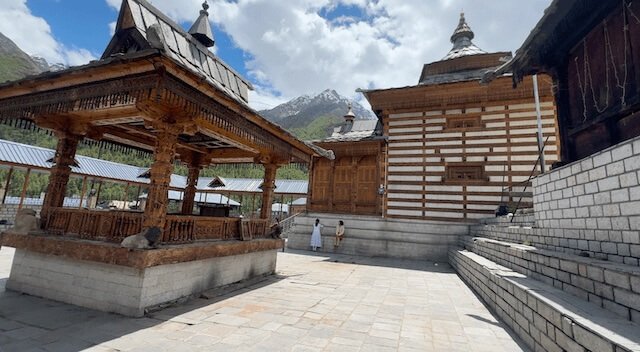
Dedicated to the local deity Goddess Mathi, this centuries-old wooden temple showcases the remarkable craftsmanship of traditional Kinnauri architecture. Even if you’re not particularly interested in temples, the intricate woodwork and cultural significance make it worth visiting.
A Brief History of Chitkul
Long before tourists began arriving with cameras and motorcycles, Chitkul was an important settlement along the ancient Indo-Tibetan trade route. Traders carrying wool, salt, grains, and other goods crossed these mountains, making villages like Chitkul vital stopping points.
The village is closely associated with Goddess Mathi, who is believed by locals to be the guardian deity of Chitkul. According to local tradition, she travelled through several Himalayan regions before finally choosing Chitkul as her home. Even today, the annual village festivals revolve around her temple and continue to play an important role in community life.
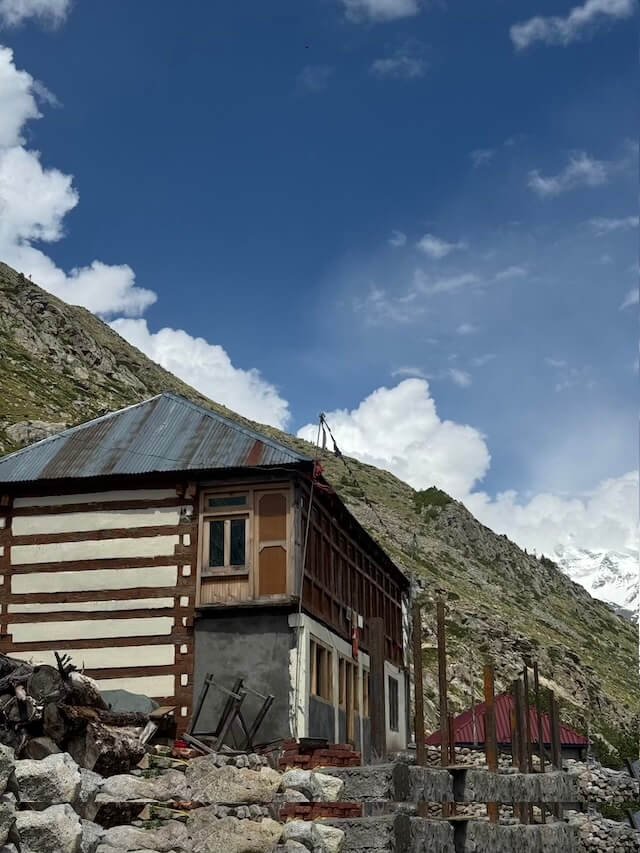
The architecture seen throughout the village reflects centuries of adaptation to harsh Himalayan winters. Thick wooden walls, stone foundations, and slate roofs were designed not just for aesthetics but for survival in a region that receives heavy snowfall.
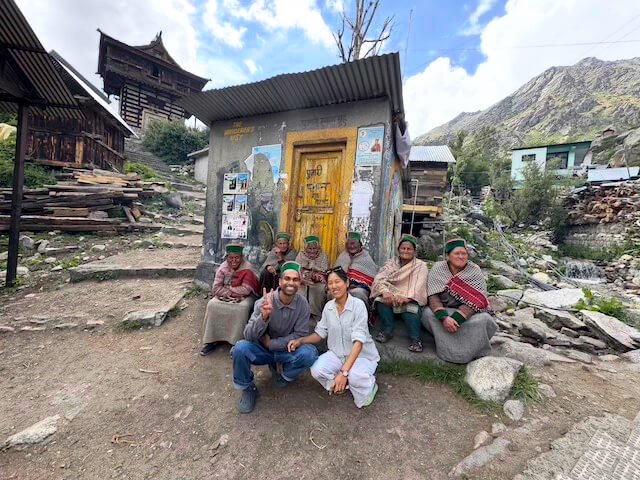
Walking through Chitkul today, you’ll notice that while tourism has brought cafés, guesthouses, and souvenir shops, much of the original village still feels remarkably authentic. Farmers continue working in their fields, livestock move through the narrow lanes, and daily life follows a rhythm shaped more by the seasons than by tourism.
Travel Tip
Don’t rush through Chitkul in a couple of hours.
Most day visitors arrive between 10 AM and 3 PM, making the village noticeably busier during these hours. If you stay overnight, you’ll experience a completely different side of Chitkul—quiet mornings, golden evening light, empty village lanes, and a peaceful atmosphere that’s impossible to enjoy on a quick stop.
Best Time to Visit Chitkul
Quick Answer? The best time to visit Chitkul is from April to June and September to October. These months offer pleasant weather, clear skies, open roads, and excellent views of the Baspa Valley. If your dream is to experience Chitkul under a blanket of snow, plan your trip between late December and February—but be prepared for extremely cold temperatures and possible road closures.
The truth is, there isn’t one “best” season to visit Chitkul. The village changes dramatically throughout the year, and every season has its own personality. I’ve visited Kinnaur in different months, and the same valley can feel like an entirely different destination depending on when you arrive.
Rather than asking “When should I visit Chitkul?”, the better question is:
“What kind of experience am I looking for?”
If someone asked me to choose just one time to visit Chitkul, I’d recommend late September or early October.
The weather is stable, the roads are generally in good condition, the skies are incredibly clear, and the valley strikes a beautiful balance between greenery and the first hints of autumn. Tourist numbers are also lower than the peak summer months, allowing you to experience the peaceful side of Chitkul that many day visitors never see.
That said, every season has its own charm. Whether you come for wildflowers in spring, cool summer escapes, autumn colours, or snow-covered winters, Chitkul has a way of making every visit feel different.
Does It Snow in Chitkul?
Snowfall usually begins sometime between late November and December, although the exact timing varies every year.
The heaviest snowfall generally occurs during January and February, when the village is often covered under several feet of snow.
If your only goal is to see snowfall, plan your visit between late December and early February, while keeping a buffer day in case roads close temporarily.
Remember that seeing fresh snowfall is never guaranteed. Mountain weather changes quickly, and nature follows its own schedule.