When someone books their first trip to South America and to Peru, Machu Picchu tends to appear before everything else. The ancient Inca city, built between mountains and clouds, is one of the most recognisable images of the continent.
Cusco, close to Machu Picchu, was the capital of the Inca Empire and sits at around 3,400 metres above sea level (11,150 feet). After a long flight, even a walk along the cobbled streets can feel heavier than expected. Around the city there are mountains, rural villages, farmland, hundreds of archaeological sites and paths that lead toward the Sacred Valley of the Incas.
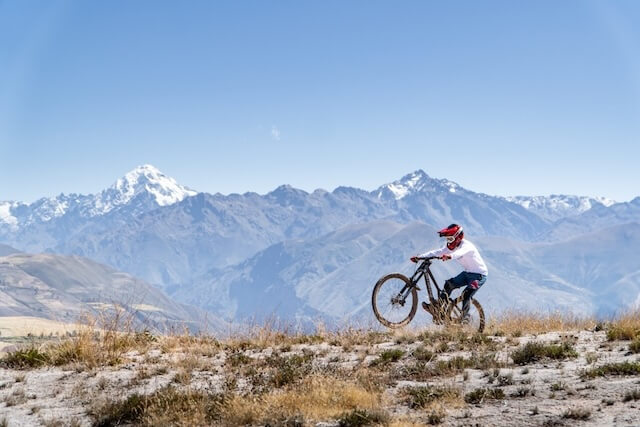
The Andes can also be explored by bike
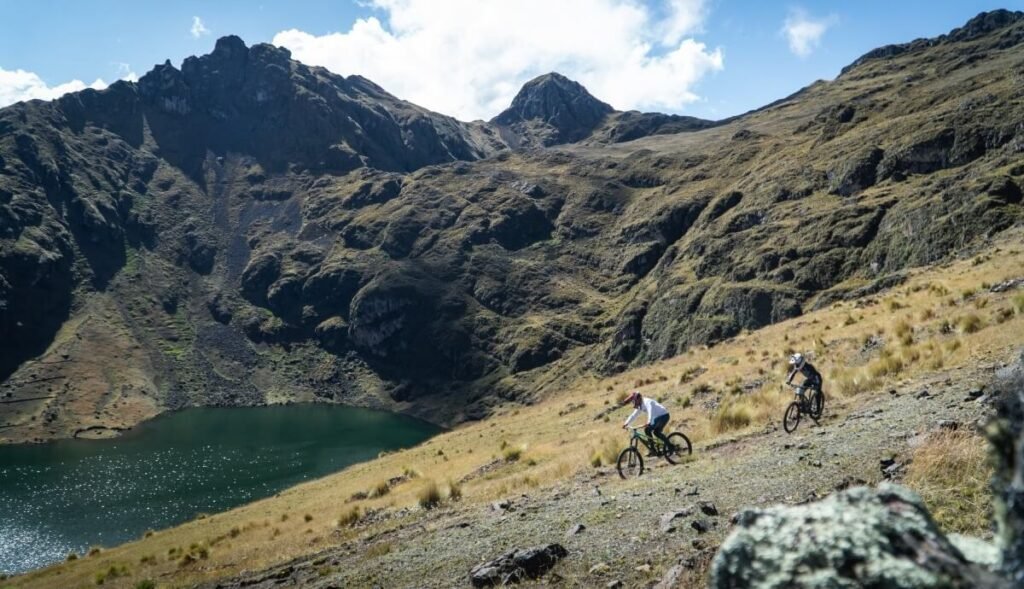
The Andes are the great mountain range that crosses much of South America and defines the landscape of southern Peru. Bicycles are used on the mountains and roads surrounding Cusco and the Sacred Valley of the Incas, close to Machu Picchu, in areas where the terrain allows you to move between different altitudes within a few hours.
From Cusco, a bicycle can take you along rural roads, hillsides and villages that rarely appear on a rushed itinerary. Some outings are done at a relaxed pace with stops to look at the valley or a lagoon; others go after longer descents and rougher terrain.
The variety means every traveller can choose based on their experience and the time they have in the region. Those who prefer a scenic day can go for an e-bike. Those who already ride mountain trails will find routes with more elevation change, rock and speed.
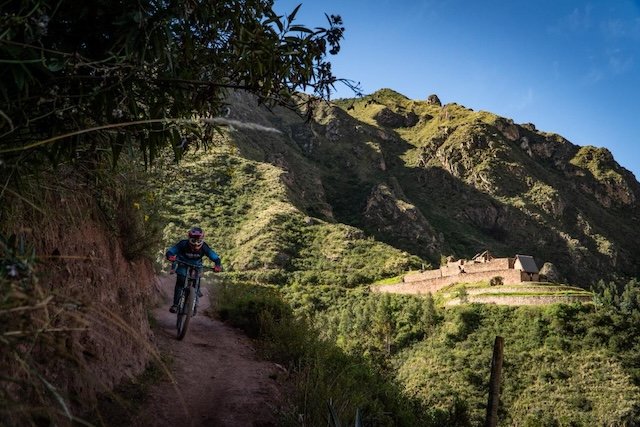
Descents, ancient paths and more technical routes
Experienced mountain bikers will find serious terrain here. Lamay is a rural village in the Sacred Valley surrounded by mountains that fall toward the Urubamba River. Its routes descend from the higher zones through narrow trails, rock, tight corners, stone stairways and sections of eucalyptus forest. This is terrain where you need to be comfortable controlling a bike on irregular ground and have some confidence when the path gets fast or technical.
Maras offers a different kind of landscape, with descents and wide views over the Sacred Valley near the salt pans. Perolniyoc crosses mountain paths close to a waterfall and Inca archaeological remains. Yuncaypata is closer to Cusco and has routes with panoramic views over the city. Each place offers a distinct experience, so it is not worth choosing based on a photograph or a route name alone.
A cyclist used to mountain trails might be looking for rock, elevation and longer descents. Someone who mainly rides in the city will probably enjoy a scenic outing on rural roads much more. Being honest about prior experience avoids a bad match and makes the day far more worthwhile.
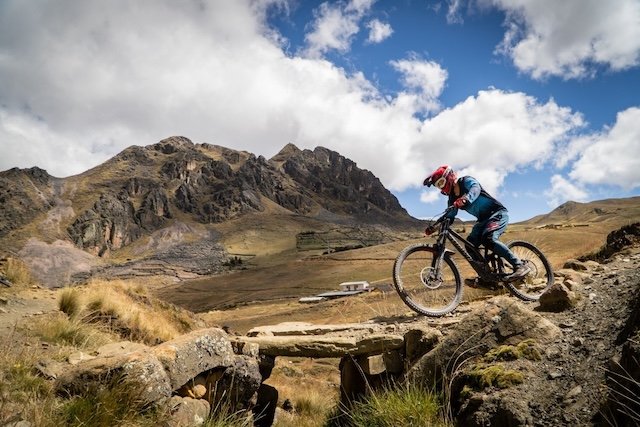
Scenic routes for getting to know the Sacred Valley
There are also outings where the bicycle accompanies the trip without turning it into a full descent day. E-bikes help particularly on the climbs, which is useful in a region where Cusco already sits at around 3,400 metres (11,150 feet). You are still pedalling and handling the bike, but the effort is spread more evenly across the day.
The Pisac Lagoons route fits this part of the map. From Cusco you travel by transport to Qello Qello, a community above Pisac, and the circuit continues toward Kinsacocha, Azulcocha and Pumacocha. It covers around 22 kilometres (13.6 miles) on rural and mountain paths, reaching approximately 4,200 metres in altitude (13,779 feet). Between one lagoon and the next there are fields, stone walls, grazing animals and open views of the mountains. At Kinsacocha, there is also a community textile centre worth stopping at. For someone who wants to spend a day in the Andes without getting into a technical route, an e-bike ride near Cusco like this one is a way to see a part of the Sacred Valley that stays well outside the most repeated itineraries.
Choosing well before you head out
Altitude is part of any plan in Cusco. A route that looks moderate on paper can feel very different at 4,000 metres. The sensible approach is to leave one or two quiet days on arrival, walk around the city, drink water regularly and see how the body responds before scheduling a long outing.
It is also worth asking about the type of terrain, the actual time on the bike, the equipment included and the plan if the weather changes. The sun can be strong at midday even if the morning started cold, and wind or rain can arrive quickly in open terrain. Water, sunscreen, sunglasses and layers usually cover most of those changes.
Machu Picchu is visited on foot and remains one of the great moments of the trip. The bike routes belong to the days around that visit: to the paths of Cusco, Lamay, Maras, Pisac and the Sacred Valley that many people cross without ever really getting to know.