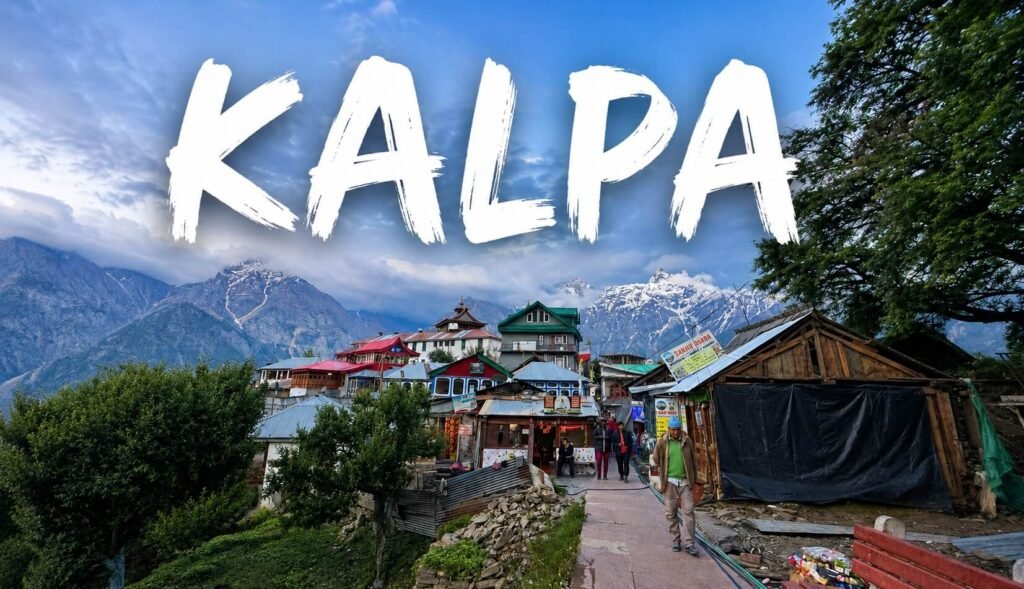
There are hill stations that impress you with bustling cafés and busy markets, and then there are places like Kalpa—a quiet Himalayan village where the rhythm of life is still dictated by apple harvests, prayer flags, and the changing light on the mighty Kinner Kailash Range.
Perched high above the Sutlej Valley in Himachal Pradesh’s Kinnaur district, Kalpa isn’t a destination for those chasing nightlife or luxury shopping. It is a place to slow down. Mornings begin with the first rays of sunlight painting Kinner Kailash in shades of gold and pink, while evenings end beneath some of the clearest star-filled skies you’ll find in the Indian Himalayas.
Although Kalpa has become increasingly popular over the last decade, it has managed to retain much of its traditional Kinnauri character. Ancient temples stand beside Buddhist monasteries, wooden homes overlook sprawling apple orchards, and narrow village lanes invite leisurely walks rather than hurried sightseeing.
For many travellers, Kalpa serves as the gateway to Kinnaur and Spiti. But that often means people spend just one night before moving on—a mistake, in my opinion. Kalpa rewards those who linger. Spend a couple of mornings here, walk through its orchards, chat with local families, and simply sit facing Kinner Kailash, and you’ll understand why so many travellers end up wishing they had planned a longer stay.
This guide brings together everything you need to plan the perfect Kalpa trip—from practical travel advice and seasonal tips to hidden viewpoints, local experiences, suggested itineraries, accommodation recommendations, and useful planning information based on real travel experience.
My advice is to avoid treating Kalpa as a stopover on your Spiti trip. Stay for at least two nights. We stayed in Kalpa for two nights, after wrapping up our travels in Sangla Valley and Chitkul. I suggest you plan a separate trip for Kinnaur. Spend a night in Shimla (or at our homestay in Matiana, 2 hours from Shimla, if you want a more peaceful location), and then 2 nights each at Sangla and Kalpa. This makes an ideal, no rush, 5-day Kinnaur.
Check out the video below (embedded from my Youtube Channel) to get an idea of how beautiful Chitkul, in Sangla Valley can be:
Kalpa: A Quick Summary
Kalpa is a picturesque Himalayan village in Kinnaur district, Himachal Pradesh, located at an altitude of about 2,960 metres (9,711 feet). It is best known for its uninterrupted views of the Kinner Kailash Range, apple orchards, traditional Kinnauri culture, peaceful atmosphere, and its location on the historic Hindustan–Tibet Road. Most travellers spend two to three days here while exploring Kinnaur or travelling towards Spiti Valley.
If you’re planning your first visit, here are the essentials:
- Best time to visit: April to June and September to November
- Snowfall season: Usually from December to February
- Ideal trip duration: Two to three days
- Nearest town: Reckong Peo, about 6 kilometres away
- Best suited for: Couples, photographers, families, road trippers, and anyone looking for a peaceful mountain escape
- Nearest petrol pump, ATMs and major medical facilities: Reckong Peo
Why Visit Kalpa?
Kalpa is one of the most rewarding destinations in Himachal Pradesh for travellers seeking spectacular Himalayan scenery, authentic mountain culture, peaceful surroundings, and a slower pace of travel. Rather than offering a long list of tourist attractions, Kalpa stands out for the overall experience of being there.
Is Kalpa worth visiting?
Yes.
The first thing you’ll notice after arriving is the mountain backdrop. Wherever you are in the village—your hotel balcony, a quiet café, or a narrow village lane—the snow-covered peaks of Kinner Kailash dominate the landscape. They seem to change colour throughout the day, glowing golden at sunrise, turning bright white by midday, and often taking on pink and orange hues at sunset.
But Kalpa isn’t just about the views.
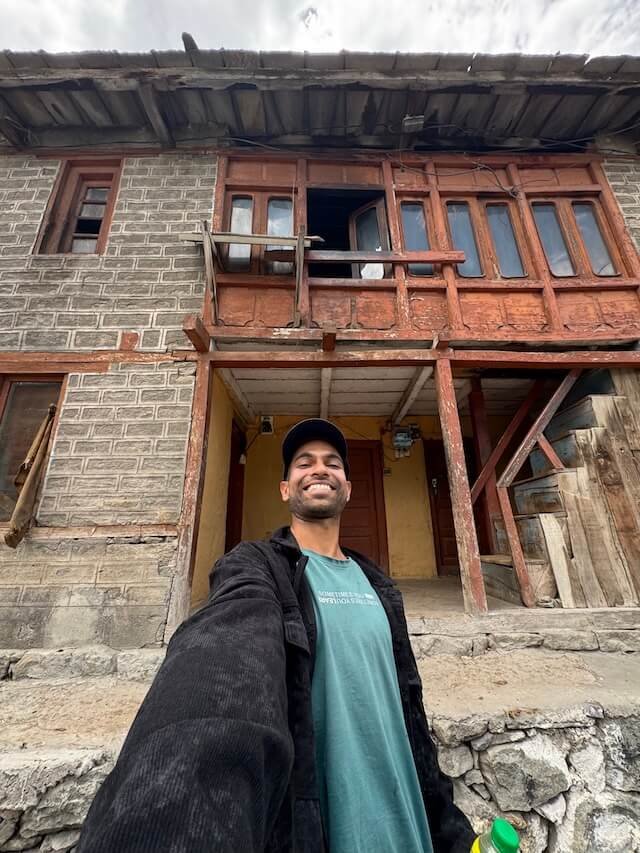
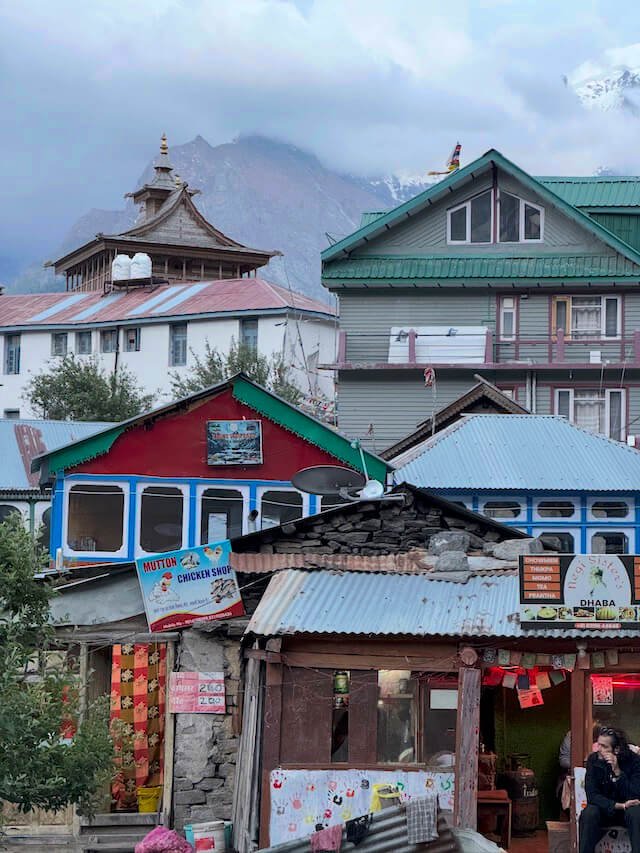
The village offers a glimpse into everyday life in Kinnaur. Apple orchards surround the settlement, ancient temples share space with Buddhist monasteries, and traditional wooden houses continue to define much of the local architecture. Instead of rushing from one attraction to another, you’ll likely spend more time walking through quiet lanes, talking to locals, enjoying local food, or simply soaking in the scenery.
Kalpa also makes an excellent base for exploring nearby places such as Roghi Village, Suicide Point, Chaka Meadows, Sangla Valley, Chitkul, and Nako without having to change accommodation every day.
If you enjoy destinations where nature, culture, and local life matter more than commercial entertainment, Kalpa is likely to become one of your favourite places in the Himalayas.
Who Should Visit Kalpa?
Kalpa isn’t a destination that appeals to everyone—and that’s precisely what makes it special.
If your ideal holiday revolves around cafés, shopping streets, nightlife, or packed sightseeing schedules, Kalpa may feel too quiet. But if you enjoy waking up to mountain views, taking leisurely walks, discovering local culture, and spending time in nature, you’ll probably wish you had stayed longer.
Kalpa is particularly well suited for couples looking for a peaceful mountain getaway. The views of Kinner Kailash, comfortable boutique hotels, and relaxed atmosphere make it one of the most romantic destinations in Kinnaur without feeling overly commercial.
Families also enjoy Kalpa because most attractions are easily accessible by road, and the village offers a safe, relaxed environment compared to busier hill stations.
For photographers, Kalpa is a dream destination. Early mornings often bring crystal-clear views of Kinner Kailash, while apple orchards, traditional architecture, monasteries, and changing mountain light provide endless photographic opportunities.
Road trippers travelling along National Highway 5 will find Kalpa to be one of the most scenic overnight stops between Shimla and Spiti Valley. Its proximity to Reckong Peo also makes it a convenient base for exploring other parts of Kinnaur.
Solo travellers, especially those interested in slow travel, often appreciate Kalpa’s welcoming atmosphere and the opportunity to experience local life beyond the usual tourist circuit.
Where is Kalpa located?
Kalpa is located in the Kinnaur district of Himachal Pradesh, about 6 kilometres uphill from Reckong Peo and roughly 230 kilometres from Shimla. The village overlooks the Sutlej Valley and directly faces the snow-covered Kinner Kailash Range, making it one of the most scenic settlements in the Indian Himalayas.
Despite feeling wonderfully remote, Kalpa is relatively easy to reach by road. After arriving in Reckong Peo, the district headquarters of Kinnaur, it’s just a short uphill drive that takes around 15 to 20 minutes.
Its location makes Kalpa an ideal base for exploring much of Kinnaur. Popular destinations such as Sangla, Chitkul, Nako, and even Spiti Valley are easily accessible from here, which is why many travellers choose to stay in Kalpa before continuing deeper into the Himalayas.
One practical advantage of staying in Kalpa instead of Reckong Peo is the setting. Being slightly higher on the mountainside gives Kalpa wider views, cleaner surroundings, and a much quieter atmosphere while still remaining close to essential services like fuel stations, ATMs, hospitals, and markets.
History of Kalpa
Kalpa has been an important settlement in Kinnaur for centuries. Historically known as Chini, it prospered because of its location on the ancient Hindustan–Tibet trade route, where traders, pilgrims, and monks travelling between India and Tibet passed through the region.
Long before tourism became part of the local economy, Kalpa was a thriving mountain settlement connected to neighbouring valleys through trade and cultural exchange. Its strategic location encouraged the mixing of Hindu beliefs, Buddhist traditions, and indigenous Kinnauri customs, many of which continue to shape daily life today.
During the British era, Kalpa attracted explorers, administrators, and travellers who described it as one of the most picturesque villages in the western Himalayas. Its cool climate and commanding views of Kinner Kailash made it a popular stop for officials travelling through the region.
The biggest transformation came during the twentieth century with the introduction of commercial apple cultivation. Apples soon became the primary source of income for local families, replacing many traditional occupations and significantly improving living standards. Even today, tourism remains secondary to agriculture in Kalpa, helping the village retain much of its authentic character.
Culture and Local Life
Kalpa offers one of the best opportunities to experience traditional Kinnauri culture without venturing far from the main highway.
Life here continues to revolve around the seasons. Spring brings apple blossoms that blanket the hillsides in white and pink, summer is devoted to caring for orchards, autumn is harvest time, and winter slows everything down beneath snow-covered rooftops.
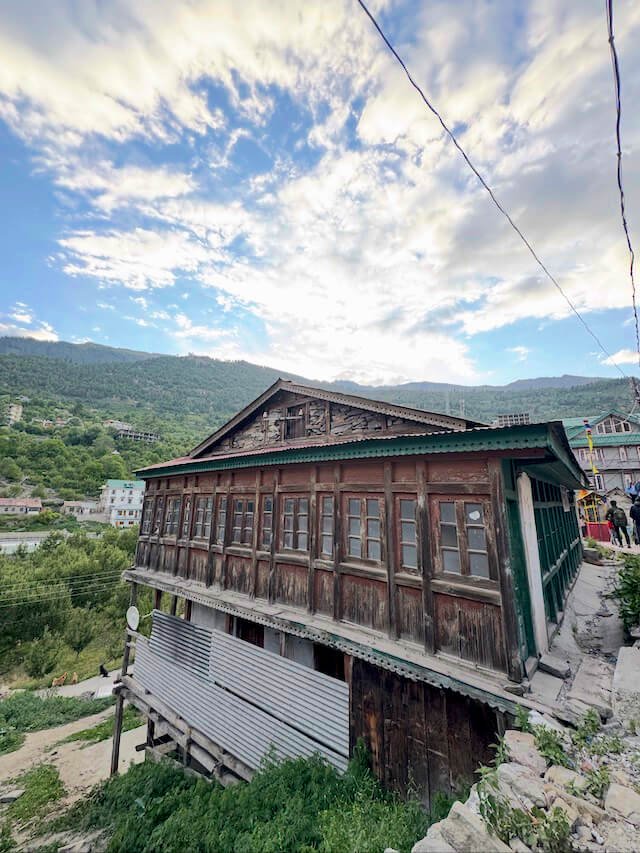
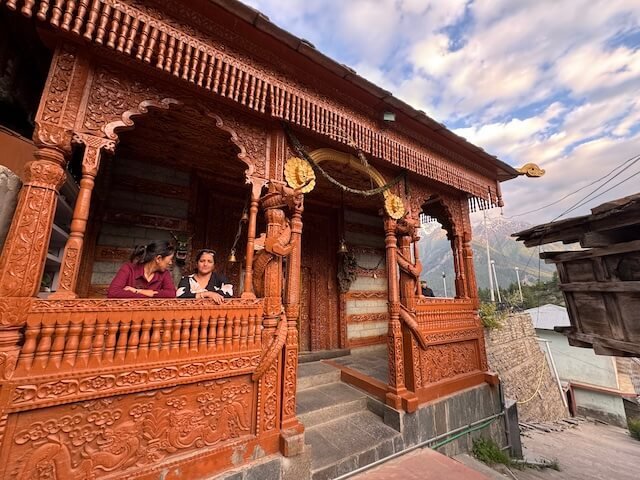
Walking through the village, you’ll notice beautifully carved wooden houses, slate roofs, colourful prayer flags, and intricately designed temples that reflect generations of local craftsmanship. Unlike many tourist destinations where traditional architecture has gradually disappeared, Kalpa has managed to preserve much of its original character.
Religion forms an important part of community life, but what stands out is the harmony between different traditions. Hindu temples dedicated to local deities exist alongside Buddhist monasteries, reflecting centuries of cultural exchange between India and Tibet.
Visitors are generally welcomed warmly, especially when they show genuine interest in local traditions. If you happen to visit during apple season, remember that the orchards are private property. Many owners are happy to chat or even offer fruit, but it’s always courteous to ask before entering.
One of the simplest yet most rewarding experiences in Kalpa is taking an unhurried walk through its residential lanes early in the morning. You’ll often see villagers tending orchards, children walking to school, and elderly residents sitting outside their homes with the Kinner Kailash peaks rising in the background.
What is the altitude of Kalpa?
Kalpa sits at an elevation of approximately 2,960 metres (9,711 feet) above sea level. This altitude gives the village cool summers, cold winters, and some of the finest mountain views in Himachal Pradesh.
For most travellers arriving from Shimla or the plains, the altitude isn’t high enough to cause serious discomfort, although some people may notice mild breathlessness or fatigue on the first day. Taking it easy after arrival, staying hydrated, and avoiding strenuous activity during the first few hours is usually enough.
Kalpa’s elevation also makes it an excellent place to acclimatize before continuing towards higher destinations such as Nako, Tabo, Kaza, or other parts of Spiti Valley.
What is the weather like in Kalpa?
Kalpa experiences a cool mountain climate throughout the year. Summers are pleasant, autumn offers clear skies and apple harvests, winters bring regular snowfall, while the monsoon months can see heavy rain and occasional landslides on the approach roads.
Each season transforms Kalpa into a completely different destination.
Spring is perhaps the most underrated time to visit, when apple orchards burst into bloom and the hillsides become lush and colourful. Summer offers comfortable daytime temperatures, making it ideal for sightseeing, road trips, and photography.
The monsoon brings dramatic cloud formations and vibrant greenery, but travellers should remain prepared for occasional road closures or delays caused by landslides along National Highway 5.
Autumn is widely considered one of the finest seasons, thanks to crystal-clear mountain views, pleasant weather, and the excitement of apple harvesting.
Winter blankets the village in snow, turning Kalpa into a peaceful mountain retreat. While daytime sightseeing remains possible on many days, temperatures often drop well below freezing after sunset, making warm clothing essential.
A practical tip worth remembering is that mountain weather is far less predictable than weather apps suggest. Even during peak summer, mornings and evenings can be surprisingly chilly, so carrying a warm jacket throughout the year is always a good idea.
Best Time to Visit Kalpa: A Complete Month-by-Month Guide
One mistake I see many travellers make is asking, “What’s the best month to visit Kalpa?” There isn’t one answer.
I’ve visited the mountains in different seasons over the years, and Kalpa is one of those places that completely changes its personality with the calendar. Spring is all about blossoms and fresh greenery. Summer is comfortable and lively. Autumn brings golden orchards and unbelievably clear skies. Winter transforms the village into a snowy Himalayan postcard.
The better question to ask is: What kind of Kalpa do you want to experience?
When is the best time to visit Kalpa?
The best time to visit Kalpa depends entirely on the kind of experience you’re looking for. For pleasant weather and sightseeing, visit between April and June. For crystal-clear mountain views and apple season, September and October are hard to beat. If snowfall is your priority, plan your trip between late December and February. Personally, if I had to choose just one season, I’d pick October for its perfect weather, golden autumn colours, and some of the clearest views of the Kinner Kailash range.
Kalpa Weather Throughout the Year
Kalpa sits at nearly 3,000 metres above sea level, so the weather is cooler than most hill stations. Even in peak summer, you’ll appreciate carrying a light jacket in the mornings and evenings.
The weather can also change quickly. It’s not unusual to wake up to bright blue skies, see clouds rolling in after lunch, and enjoy another clear evening by sunset. This is one reason photographers often stay for at least two nights—the mountains rarely look the same twice.
Kalpa in January
January is winter at its peak. If you’ve always imagined waking up to snow-covered rooftops with the Kinner Kailash range shining in the morning sun, this is the month that comes closest.
Temperatures usually remain below freezing at night, while daytime temperatures often stay between 2°C and 8°C.
Snowfall is common, though not guaranteed every day. Fresh snowfall can temporarily block smaller roads around Kalpa, but the main approach road from Reckong Peo is generally cleared fairly quickly unless there’s an unusually heavy storm.
The village is quiet, and many hotels offer attractive off-season rates. You’ll often find yourself sharing viewpoints with only a handful of other travellers.
Why visit in January?
- High chance of snow
- Peaceful atmosphere
- Beautiful winter landscapes
- Lower hotel prices
- Things to keep in mind
- Very cold mornings and nights
- Some cafés and smaller guesthouses may close temporarily
- Occasional road delays after heavy snowfall
Pack: Thermal wear, insulated jacket, gloves, woollen cap, warm socks, waterproof shoes, sunglasses, lip balm, moisturiser.
Kalpa in February
February continues the winter magic but often offers slightly clearer skies than January.
Fresh snow still covers many surrounding peaks, while the days gradually become longer. If you’re lucky, you may experience snowfall followed by clear sunshine the next morning—a dream combination for photographers.
Hotel prices remain relatively affordable, and the village stays pleasantly uncrowded.
This is one of my favourite months if your priority is mountain photography rather than sightseeing.
Kalpa in March
March marks the beginning of spring.
Snow starts melting from lower slopes, though the Kinner Kailash peaks remain snow-covered. The landscape slowly turns green again, and daytime temperatures become much more comfortable.
Tourist numbers remain low, making it an excellent shoulder season.
If you’re hoping for heavy snowfall, March is usually too late. But if you want pleasant weather without the summer crowds, it’s a wonderful time to visit.
Kalpa in April
April is one of the most underrated months in Kalpa.
This is when apple orchards begin flowering, transforming entire hillsides into shades of white and pale pink. Walking through Kalpa during blossom season feels completely different from visiting later in the year.
Many people confuse Kalpa’s blossom season with Japan’s cherry blossom season. While there are cherry trees in parts of Kinnaur, what you’ll mostly see in Kalpa are apple blossoms, and they’re equally spectacular.
The weather is cool but comfortable, making long walks around the village especially enjoyable.
Road conditions are generally excellent, and tourist crowds are still moderate.
Kalpa in May
May brings warmer days and reliably clear weather.
This is when Kalpa starts welcoming family holidays, bikers, photographers, and road trippers escaping the heat of North Indian cities.
The snow on nearby mountains creates a beautiful contrast against green orchards below.
Most hotels reopen fully during this period, giving visitors plenty of accommodation choices.
If you’re driving from Delhi or Chandigarh, May offers some of the safest road conditions of the year.
Kalpa in June
June is one of the busiest months.
Schools are closed across much of India, bringing families to Himachal. Hotel occupancy increases significantly, and prices usually rise accordingly.
The weather remains pleasant, although afternoons occasionally become hazy compared to the crystal-clear skies of autumn.
If you’re planning to continue towards Spiti Valley, June is an excellent month because most high-altitude roads have reopened after winter.
Book accommodation well in advance if travelling during weekends or school holidays.
Kalpa in July
July marks the arrival of the monsoon.
Unlike Shimla or Manali, Kalpa doesn’t receive extremely heavy rainfall every day, but the roads leading into Kinnaur can become vulnerable to landslides, especially along National Highway 5.
Clouds frequently cover the mountains, meaning you may not get uninterrupted views of Kinner Kailash throughout your stay.
The upside?
The valley becomes incredibly green, waterfalls are at their fullest, and hotel prices drop noticeably.
If your itinerary is flexible and you’re comfortable with possible travel delays, July can still be rewarding.
Kalpa in August
August continues the monsoon pattern.
The scenery remains lush, but road conditions require close attention.
Always check the latest highway status before leaving Shimla, especially if heavy rain has been forecast.
Photographers who enjoy dramatic clouds often love this season, although patience is required because mountain views can disappear for hours before suddenly clearing again.
Kalpa in September
If someone asked me to recommend just one month for visiting Kalpa, September would be near the top of my list.
The monsoon retreats, leaving behind freshly washed mountains, clean air, and remarkably clear skies.
Apple harvesting begins across much of the region, giving visitors the chance to see orchards bustling with activity.
Road conditions improve dramatically compared to July and August.
Photography is exceptional during this period.
Kalpa in October
October is, in my opinion, the finest month to experience Kalpa.
The weather is stable.
Rainfall is minimal.
The skies are often deep blue.
The Kinner Kailash range appears incredibly sharp.
Apple harvest continues into early October, while many trees begin turning shades of yellow and gold, adding another layer of colour to the landscape.
Tourist crowds remain moderate—not too busy, not too quiet.
If you’re visiting Kalpa for the first time, October is the month I’d personally recommend.
Kalpa in November
November feels like the calm before winter.
The trees gradually shed their leaves, mornings become noticeably colder, and the first light snowfall occasionally arrives towards the end of the month.
The air remains exceptionally clear, making this another favourite season for photographers.
Hotels begin lowering prices as winter approaches.
Carry warm clothing, especially for evenings.
Kalpa in December
December brings winter back to Kalpa.
Snowfall becomes increasingly likely during the second half of the month, especially around Christmas and New Year.
This is one of the busiest periods despite the cold, so don’t expect the low hotel prices of January.
Many visitors specifically travel to celebrate New Year’s Eve surrounded by snow-covered mountains.
If snowfall is your priority, late December offers an excellent balance between accessibility and winter scenery.
Apple Season in Kalpa
Apple orchards define the landscape of Kalpa.
Flowering usually begins in April, when entire hillsides are covered with delicate white blossoms.
By summer, small green apples begin appearing on the trees.
The main harvesting season generally starts in late August and continues through September, with some orchards harvesting into early October, depending on the variety and weather.
If you’ve ever wanted to see Kinnaur’s famous apple industry in action, September is the ideal month.
Blossom Season
The most beautiful flowering season in Kalpa is usually April.
This isn’t famous in the way Japan’s cherry blossom season is, but personally, I find walking through blooming apple orchards with snow-covered Himalayan peaks in the background even more memorable.
It’s one of the most underrated reasons to visit Kalpa.
Autumn Colours in Kinnaur
Autumn arrives gradually from late September, reaching its peak during October.
Apple orchards begin turning golden, poplar trees develop bright yellow leaves, and the crisp mountain air creates exceptional visibility.
For landscape photography, this is arguably the most beautiful season of the year.
Snowfall Season In Kalpa
Snowfall generally begins sometime between late December and early January and continues through February, though every winter is different.
The heaviest snowfall often occurs in January.
If seeing snow is the only reason for your trip, avoid planning around fixed dates. Mountain weather is unpredictable, and snowfall can arrive earlier or later than expected.
A flexible itinerary always gives you better chances.
Things to Do in Kalpa
Although Kalpa is often described as a “small village,” don’t make the mistake of thinking there’s little to do here. Kalpa isn’t a destination where you’ll spend the day ticking off monuments or rushing between tourist attractions.
Instead, its appeal lies in experiencing the village at a slower pace—walking through centuries-old lanes, watching the changing colours of the Kinner Kailash Range, visiting ancient temples and monasteries, and simply soaking in the atmosphere.
Kinner Kailash View-Point
Kinner Kailash View Point offers one of the finest publicly accessible views of the sacred Kinner Kailash Range. It is the most popular viewpoint in Kalpa and one of the best places in Himachal Pradesh to watch sunrise over the Himalayas.
While the mountains dominate almost every view in Kalpa, this viewpoint offers one of the widest panoramas of the entire Kinner Kailash range.
On clear mornings, you’ll understand why so many travellers wake before dawn. As sunlight slowly reaches the peaks, the mountains transform from deep blue silhouettes into glowing shades of orange, pink, and finally brilliant white.
Narayan Nagini Temple
Narayan-Nagini Temple is one of Kalpa’s oldest and most culturally significant temples, known for its remarkable Kinnauri wooden architecture and its importance in local religious traditions.
Even if you’re not particularly interested in temples, this is worth visiting for its craftsmanship alone.
The beautifully carved wooden exterior showcases traditional Kinnauri architecture that has evolved over centuries to withstand earthquakes and harsh mountain winters.
The temple continues to play an important role in local festivals and village life, making it feel more authentic than many tourist-oriented religious sites elsewhere in Himachal.
Buddhist Monastery In Kalpa
Hu-Bu-Lan-Kar Monastery offers a peaceful glimpse into Kalpa’s Buddhist heritage and provides beautiful views of both the village and surrounding mountains.
One of the things I appreciate most about Kalpa is how naturally Hindu temples and Buddhist monasteries coexist.
The monastery isn’t particularly large, but its peaceful atmosphere makes it worth visiting.
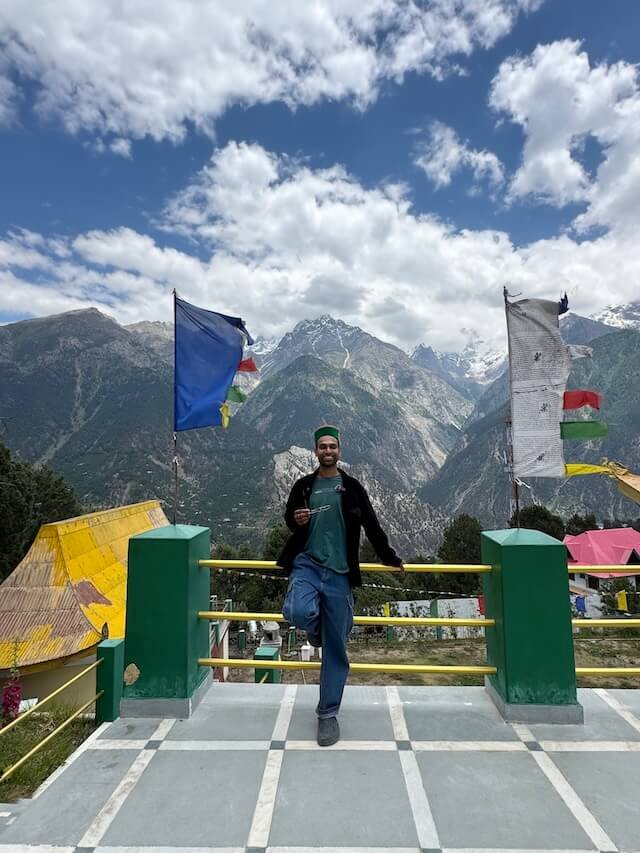
Prayer wheels spin gently in the mountain breeze while colourful prayer flags flutter against the backdrop of snow-covered peaks.
Roghi Suicide Point
If there’s one place around Kalpa that almost every visitor talks about, it’s Roghi Suicide Point.
Personally, I wish it had a different name.
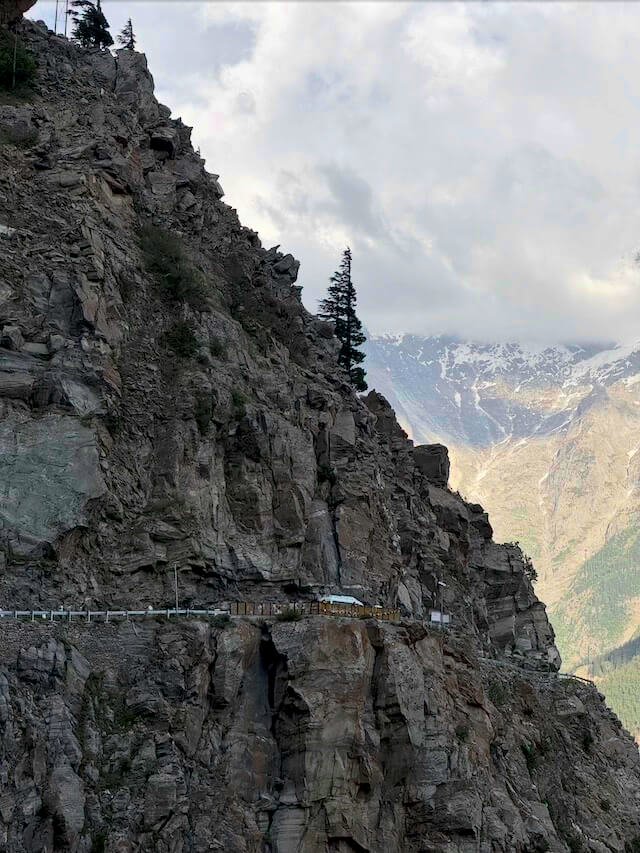
The name tends to attract attention for the wrong reasons, when in reality this is simply a spectacular cliff-side viewpoint overlooking one of the deepest valleys in Himachal Pradesh. The name is believed to refer to the sheer vertical drop beside the road rather than any specific historical incident.
The real attraction isn’t the “danger”—it’s the landscape.
Standing here, you’ll see the mighty Sutlej River winding hundreds of metres below, towering rock faces rising almost vertically from the valley floor, distant villages clinging impossibly to mountain slopes, and the snow-covered Kinner Kailash range dominating the skyline.
For photographers and road-trip enthusiasts, the drive itself is almost as memorable as the viewpoint.
My advice is to avoid treating Kalpa as a stopover on your Spiti trip. Stay for at least two nights. Wake up early for sunrise, spend the afternoon exploring the village on foot, and reserve one evening just for watching the mountains change colour. That’s when Kalpa reveals its true charm.